A gate should do more than open and close. For a Houston-area homeowner, business owner, or ranch operator, it is the first line of access control and a highly visible part of the property. Smart gate technology trends are changing how gates handle visitors, deliveries, employees, and everyday traffic – but the best upgrade is not always the one with the most features.
The right system starts with the gate itself. A well-built sliding, swing, cantilever, or ranch gate must be properly sized, supported, and installed before automation, cameras, or app controls can add real value. When the structure and technology work together, property owners gain dependable access, stronger security, and a more convenient daily routine.
Smart Gate Technology Trends That Matter
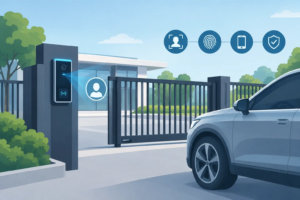
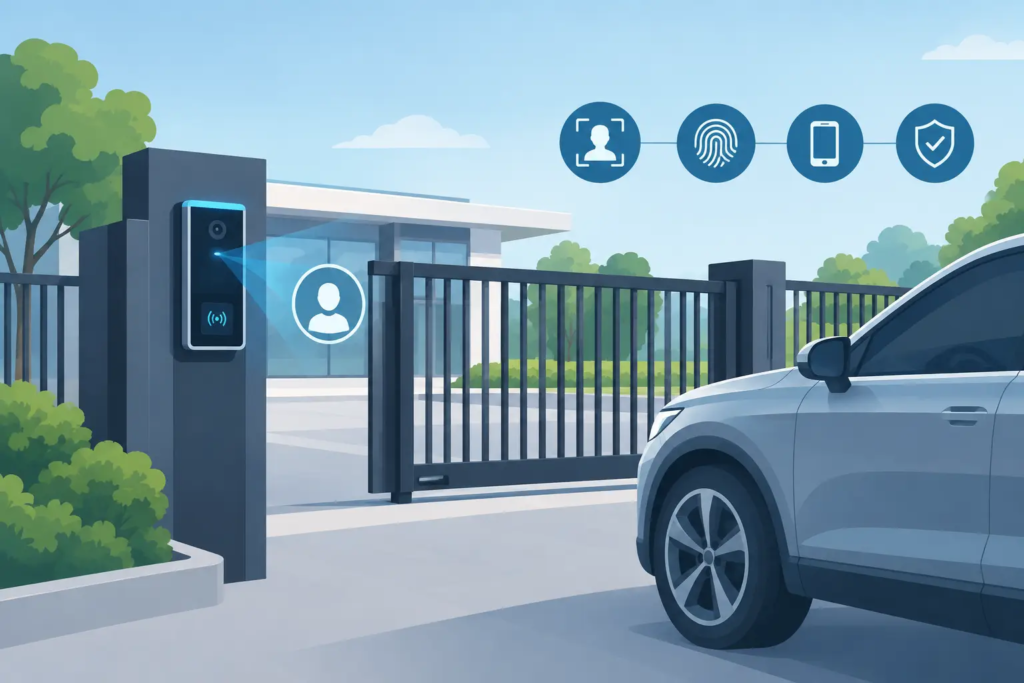
Smart gate systems are moving beyond a simple remote control. Property owners now expect controlled access from a phone, clear visibility at the entrance, and options for granting entry without handing out a physical key or transmitter.
The strongest trend is integration. Rather than treating the operator, keypad, camera, lighting, and access credentials as unrelated items, a well-planned installation brings them together around how the property is actually used. A family may need reliable guest access and package delivery communication. A commercial site may need entry logs, scheduled credentials, and separate access rules for employees and vendors. A ranch may need durable long-range controls that work at a remote entrance.
Technology should support the gate’s purpose, not complicate it. A system that is hard to use will eventually be bypassed, which defeats much of the security benefit.
Smartphone-Controlled Access
Phone-based gate control is among the most requested improvements. Depending on the equipment selected, an owner can open or close a gate from an app, receive an alert when it is activated, and manage access without being physically near the entrance.
This is especially useful when guests, service providers, or family members arrive while no one is at the gate. For property managers and business owners, remote controls can also reduce the need to distribute and recover remotes when staffing changes.
There are trade-offs. App-based access depends on a reliable cellular or internet connection, and users still need a practical backup method during an outage or when a phone battery is dead. A keypad, vehicle transmitter, or manual release should remain part of the plan.
Video Intercoms and Gate Cameras
A camera at the entrance gives property owners something a keypad alone cannot: context. Instead of deciding whether to open the gate based only on a call or a name, the owner can see who is there and communicate with them before granting access.
Video intercoms are particularly helpful on long driveways, gated communities, commercial yards, and properties where the main building is far from the entrance. They can also improve daily convenience for deliveries. The driver can call from the gate station, the resident can verify the visit, and access can be granted without walking outside.
Camera placement matters as much as the camera model. The unit needs a useful view of the vehicle approach and the person at the gate, while avoiding glare from low sun, headlights, or nearby lighting. In coastal and humid areas around League City, equipment housings, wiring connections, and mounting hardware should also be chosen with weather exposure in mind.
Digital Credentials Instead of Shared Remotes
Traditional clicker remotes remain useful, especially for family vehicles and frequent users. Still, digital credentials are becoming more common because they offer better control over who can enter and when.
A homeowner may provide a temporary code for a contractor. A business can issue individual credentials to employees and remove access when employment ends. A property manager can create a scheduled code for landscaping crews, cleaning services, or maintenance teams. This reduces the uncertainty that comes with a remote that may have been copied, lost, or never returned.
Not every property needs a complex credential system. For a small residence with only a few trusted users, a quality keypad and a limited number of remotes may be the more practical investment. The goal is appropriate control, not unnecessary administration.
Vehicle Detection and Hands-Free Entry
Vehicle detection is also improving. Driveway loops, photo eyes, wireless sensors, and approved hands-free devices can trigger a gate or keep it from closing on a vehicle. These features are often chosen for convenience, but they are equally important for safe operation.
A properly designed setup considers how vehicles approach and exit the gate. A busy commercial driveway may need different detection zones than a private home. A swing gate needs clearance through its full travel path, while a sliding gate needs protected space along the fence line. Equipment must be configured around real traffic patterns, including trailers, work trucks, and larger farm vehicles.
Safety Is the Standard, Not an Upgrade
Automation adds moving parts and more responsibility. A gate operator should include the right safety devices for its design, location, and use. Photo eyes, monitored edge sensors, warning signs, appropriate clearance, and correctly adjusted operating force all help reduce the risk of injury or damage.
This is one area where property owners should avoid treating gate automation as a do-it-yourself electronics project. A gate can be heavy, powerful, and exposed to unpredictable use by children, visitors, delivery drivers, and vehicles. Professional installation helps ensure the operator, controls, entrapment protection, and gate structure work as one system.
Regular maintenance matters after installation as well. Hinges, rollers, tracks, chains, hardware, safety sensors, wiring, and operator settings should be inspected periodically. A smart control system cannot compensate for a sagging gate, worn rollers, or a misaligned photo eye.
Power and Connectivity Shape the Right Choice
Many smart features depend on two basic resources: power and communication. At a home with electrical service near the entrance, hardwired power can support a broad range of operators and accessories. At a distant ranch gate or a property where trenching is difficult, solar power may be a practical option.
Solar systems work best when the panel receives sufficient sunlight and the equipment is sized for the gate weight, daily cycles, and local weather conditions. A heavily used commercial gate may require more battery capacity or conventional electrical power. Selecting too small a system can lead to unreliable operation when it is needed most.
Connectivity requires similar planning. Wi-Fi may work near the building but become weak at a long driveway entrance. Cellular-based controllers can solve that problem in some locations, though they may involve ongoing service costs. Before choosing app controls or video features, test coverage where the equipment will be installed rather than assuming the signal will reach.
Choosing Technology by Property Type
The most useful smart gate features depend on who uses the entrance and how often. A residential driveway often benefits from a video intercom, keypad, app control, and safety sensors. The emphasis is usually visitor screening, family convenience, and curb appeal.
Commercial properties may place more value on audit trails, scheduled credentials, multiple user groups, and durable equipment rated for frequent cycles. A gate at a contractor yard, warehouse, or managed property must stand up to repeated openings throughout the day while keeping access organized.
Farm and ranch properties often require a different balance. Long distances, uneven terrain, trailers, livestock, and limited utilities can make simple, durable controls more valuable than a feature-heavy system. Solar-capable operators, dependable remotes, keypads, and carefully planned vehicle access can provide the right level of control without adding unnecessary complexity.
Build the Gate Before Adding the Features
Smart controls perform best on a gate built for the job. The gate material, frame strength, hinge or track system, posts, foundation, opening width, and operator capacity all affect long-term performance. A decorative gate may need a different operator and support structure than a heavy steel commercial slide gate or a wide ranch entrance.
Custom gate design gives owners room to combine security with appearance. Wood, ornamental iron, aluminum, steel, and mixed-material designs can be matched to the fence, architecture, and access requirements of the property. The technology can be placed discreetly so the entrance remains attractive without sacrificing function.
Before selecting equipment, think through the daily scenarios: who enters, how they arrive, what happens during a power interruption, where visitors stop, and whether trucks or trailers need extra clearance. A properly planned gate should make those moments easier, not create a new point of frustration.
The best smart gate is not the one with every available feature. It is the one built with quality materials, installed for the property’s real traffic patterns, and equipped with controls that owners will use with confidence for years to come.