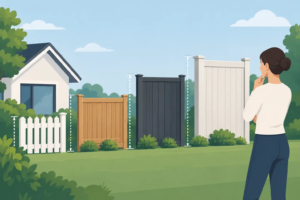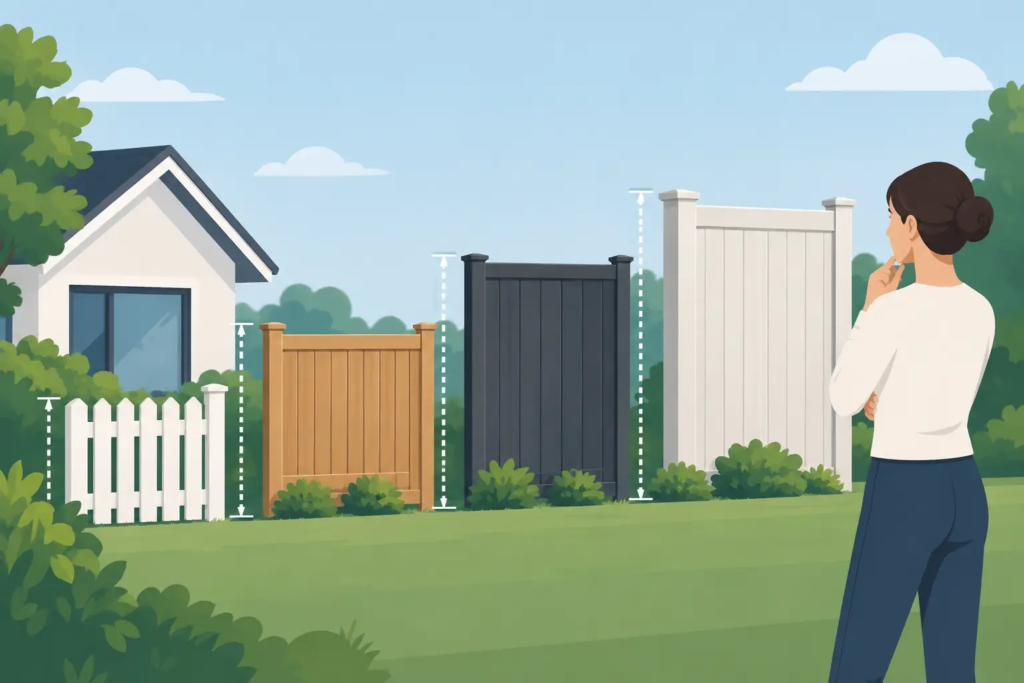
A fence that is two feet too short can leave a patio exposed, give a determined dog an easy exit, or fail to create the separation your business needs. A fence that is taller than necessary can block a view, feel imposing, add cost, and create permit concerns. Knowing how to choose fence height starts with a clear picture of what the fence must do on your property.
Height is not simply a style decision. It affects privacy, security, wind exposure, material requirements, gate design, and the overall appearance of your home, ranch, or commercial site. The right answer depends on the property, the fence material, and the problem you are trying to solve.
Start With the Fence’s Primary Job
Most fence-height decisions become easier once you identify the primary purpose. Privacy fencing usually needs more height than a decorative boundary. A fence meant to contain livestock has different requirements than one installed around a backyard pool or commercial storage yard.
For many residential properties, a 6-foot privacy fence provides a practical balance. It blocks most ground-level views between neighboring yards without overwhelming the landscape. This height is common for wood privacy fences, composite fencing, and many metal privacy designs. If a backyard sits higher or lower than the adjacent property, however, the effective height can feel very different from one side to the other.
A 4-foot fence often works well where the goal is boundary definition, curb appeal, or keeping smaller pets contained. Aluminum, wrought iron, picket, and chain link fences at this height can preserve visibility while creating a clear edge around a front yard, garden, or open backyard.
When security is the priority, height is only one part of the solution. A taller fence may discourage casual trespassing, but material strength, rail construction, gate hardware, access control, and visibility around the perimeter matter just as much. A commercial fence should be designed as a complete system rather than judged by height alone.
How to Choose Fence Height for Privacy
Privacy is one of the most common reasons Houston-area homeowners replace an aging fence or install a new one. Before selecting a height, stand in the spaces you use most: the patio, pool deck, outdoor kitchen, garden, and windows facing the property line. Look toward neighboring homes, elevated decks, driveways, and nearby streets.
A standard 6-foot privacy fence is usually enough to screen normal backyard activity. It is particularly effective when paired with solid vertical boards, properly placed gates, and a layout that follows the property line cleanly. If your lot backs up to a busy road or commercial area, a taller approved design or a masonry perimeter wall may be worth discussing.
More height is not always better. Tall solid fencing can cast shade on landscaping, limit airflow, and make a compact yard feel enclosed. In humid Gulf Coast conditions, airflow can be valuable for comfort and for reducing lingering moisture around the fence. A custom design can provide privacy where it matters most while using stepped sections, decorative top treatments, or more open fencing in less sensitive areas.
Match Height to Pets, Children, and Livestock
For pet containment, measure the dog you have, not the dog you hope will stay calm outdoors. Small dogs may be secure behind a 4-foot fence, while athletic or large breeds often need a 6-foot fence. Dogs that climb, dig, or react strongly to nearby animals may need additional planning beyond a taller panel.
The fence should extend close enough to the ground to prevent escape underneath, and the gate should have dependable latching hardware. For an energetic dog, an open-style fence may also create more visual stimulation than a solid privacy fence. The best choice depends on the animal’s size, behavior, and daily environment.
Families with young children should think about the areas they need to control. A fence around a general backyard may be different from a code-compliant barrier around a swimming pool. Pool safety requirements can be specific about height, gaps, gates, latches, and self-closing features. Do not assume a standard backyard fence automatically meets those requirements.
On ranch and farm properties, fence height must match the livestock and the terrain. Horses, cattle, goats, and other animals place different demands on a fence. Visibility, wire spacing, post depth, and resistance to pressure may matter more than simply adding height. A well-built farm or ranch fence is designed around the animals it contains and the way the land is used.
Consider the Slope Before Choosing a Number
Fence height is measured from the ground, which means sloped lots require more attention than level yards. A 6-foot fence installed along a grade can look uneven or leave visible gaps beneath the bottom line if the layout is not planned correctly.
There are two common approaches. A racked fence follows the slope smoothly, which is often suitable for certain metal, aluminum, and chain link systems. A stepped fence uses level sections that drop gradually as the grade changes. This approach is common with wood privacy fencing and can create a crisp, intentional appearance.
Both options affect privacy. A stepped fence may need careful board placement or landscaping to prevent sight lines through lower areas. A contractor should evaluate the full property line, not just one section, before finalizing the design. Corners, gates, drainage paths, retaining walls, and changes in elevation all influence the finished height.
Check Rules Before Finalizing Your Design
Local regulations, neighborhood associations, deed restrictions, and utility easements can limit fence height or dictate where a fence can be installed. Rules may differ between front yards, side yards, and backyards. Corner lots can have visibility requirements near streets and driveways, while commercial properties may have separate standards for perimeter security.
Before construction begins, verify the property line and review applicable requirements. This is especially important if the fence will replace an existing boundary that may not have been installed precisely. Building on the wrong side of a property line can create an expensive dispute, regardless of how attractive the new fence looks.
If you live in League City, Friendswood, Clear Lake, or another nearby community, requirements can vary by municipality and subdivision. A professional consultation helps identify practical concerns early, including gate placement, setbacks, drainage, and the right height for the intended use.
Choose a Material That Performs at That Height
Every material behaves differently as fence height increases. Taller wood fences need strong posts, quality framing, and proper installation to stand up to wind and moisture. In the Texas Gulf Coast region, wind load and soil conditions should be part of the construction plan, not an afterthought.
Wrought iron and aluminum fences offer visibility and a refined appearance, but they do not provide solid privacy without landscaping or added screening. Chain link can be an economical choice for large areas, pet containment, and commercial sites, with height options that support a range of security needs. Metal fencing can offer durability and a modern appearance, while brick perimeter fencing provides substantial privacy and a more permanent architectural statement.
Gate height should generally coordinate with the fence. A short gate in a tall privacy fence creates an obvious weak point, while an oversized gate can become difficult to operate if it is not properly framed and supported. On driveways and commercial entrances, the gate design should account for vehicle clearance, access needs, and daily use.
Think About Appearance From Both Sides
A fence should protect the property without making it feel disconnected from the neighborhood. Consider how the height will look from the street, from the home, and from adjoining properties. A front-yard fence may need to be lower and more open to maintain visibility and curb appeal, while a rear privacy fence can be taller and more enclosed.
Details make a difference. Board orientation, post caps, trim, color, decorative metalwork, and gate design can make a tall fence look intentional instead of heavy. Custom fencing is especially useful when one portion of the property needs privacy, another needs pet containment, and the front entry needs a more open, welcoming design.
The best fence height is the one that solves the real problem without creating a new one. Walk the property, consider what happens at each boundary, and build around how you actually live or work there. A carefully planned fence gives your property the privacy, security, and finished appearance it deserves for years to come.