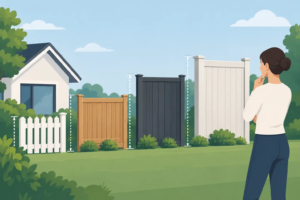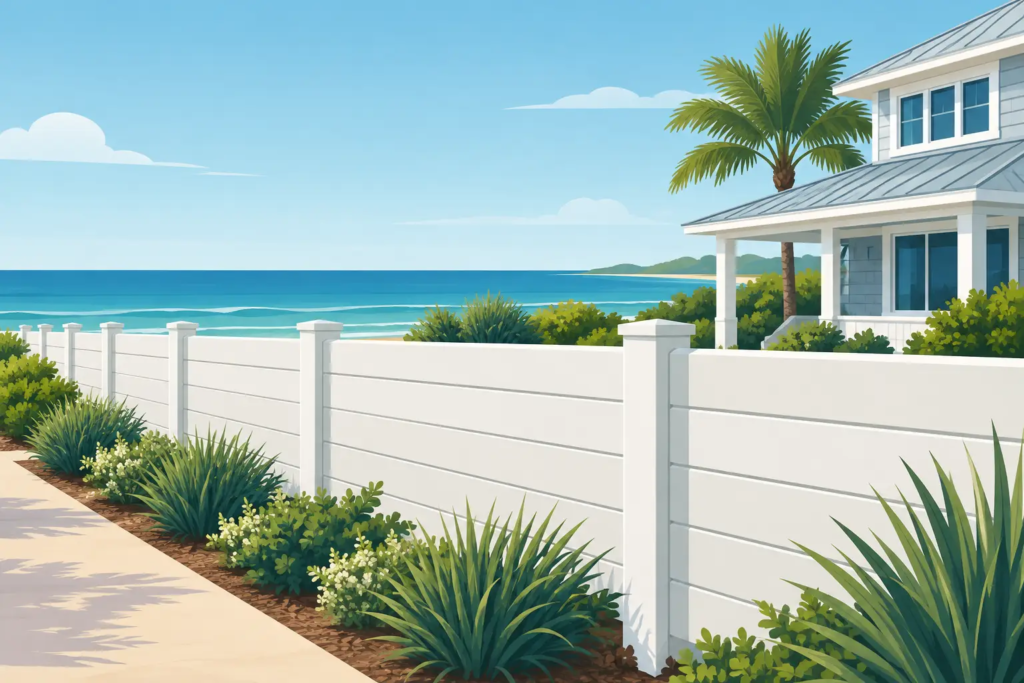
A coastal fence has a harder job than most. Salt-laden air settles on exposed surfaces, humid conditions invite mildew, shifting soil can affect posts, and strong Gulf winds test every panel and gate. Choosing the best fencing for coastal homes means looking beyond curb appeal to the materials, fasteners, post depth, and finish that will hold up over time.
For homeowners in League City, Clear Lake, and nearby coastal communities, the right choice usually balances corrosion resistance, wind performance, privacy, maintenance expectations, and the character of the property. A fence that looks excellent on installation day should also stay secure and attractive after seasons of salt, rain, heat, and heavy weather.
What Coastal Conditions Do to a Fence
Coastal exposure is not limited to properties directly on the water. Salt air can travel inland, especially during storms and periods of strong wind. It can speed up corrosion on untreated steel, cheap fasteners, gate hardware, and damaged protective coatings. Moisture also lingers longer in humid climates, which puts wood at greater risk for rot, warping, mold, and insect activity.
Wind is another deciding factor. A solid privacy fence catches more wind than an open-style fence. If posts are shallow, rails are undersized, or panels are installed without considering wind load, a fence can lean, rack, or fail well before its expected lifespan. Quality installation matters as much as material selection.
The best approach is to choose a fence system designed for the property’s exposure. A sheltered backyard may support a different style than an open corner lot, waterfront property, or commercial site with little protection from prevailing winds.
Best Fencing for Coastal Homes by Material
No single material works best for every coastal property. The right fit depends on whether privacy, low maintenance, security, pet containment, or architectural style leads the decision.
Aluminum fencing for low-maintenance durability
Aluminum is one of the strongest choices for coastal settings because it does not rust. A quality powder-coated aluminum fence provides a clean, upscale boundary without the ongoing staining, painting, or corrosion concerns associated with basic steel fencing.
Its open picket design allows wind to pass through rather than pushing against a solid surface. That makes aluminum particularly practical around pools, front yards, landscaped boundaries, waterfront views, and properties that need security without a closed-in appearance. It is also a strong option for gates when paired with properly selected hinges and latches.
Aluminum does not provide full privacy on its own. Homeowners who want both an open perimeter fence and backyard seclusion may use aluminum in visible front or side areas and a privacy material along the rear property line.
Vinyl fencing for privacy without rot
Vinyl fencing is a practical privacy option for coastal homes because it will not rot, rust, or require paint. It offers a clean, consistent appearance and works well for homeowners who want a solid backyard barrier with relatively simple upkeep.
The quality of the vinyl system is critical. Thin panels and weak internal supports can crack or flex under heat and wind. For coastal installations, reinforced posts, quality rails, and a layout designed for wind exposure make a meaningful difference. A skilled installer can also recommend panel styles that reduce wind pressure while preserving privacy.
Vinyl can be an excellent long-term choice, but it is not automatically maintenance-free. It still benefits from periodic washing to remove salt residue, algae, and surface buildup. Gate frames and hardware require special attention because those moving components carry more stress than the fence panels.
Pressure-treated wood for a traditional custom look
Wood remains a popular choice for Texas homeowners who want warmth, flexibility, and true privacy. A well-built pressure-treated pine fence can be customized in height, board orientation, cap-and-trim details, gate style, and decorative accents. It is often the best match for a home that needs a natural look or a tailored design around an uneven property line.
Coastal conditions demand better construction practices. Posts should be set securely, rails should be sized for the fence height and wind exposure, and fasteners should be corrosion resistant. Hot-dipped galvanized or stainless-steel fasteners are far better suited to humid, salty environments than basic uncoated hardware.
Wood does require a maintenance commitment. Cleaning, staining, sealing, and prompt repair of loose boards can extend its useful life and preserve its appearance. Homeowners who want the look of wood but prefer minimal maintenance should consider whether vinyl or aluminum will better meet their expectations.
Wrought iron and steel fencing for security-focused properties
Wrought iron-style fencing and ornamental steel offer a strong, timeless appearance for homes, businesses, and properties where security is a priority. They can be customized with decorative tops, heavier posts, brick columns, and substantial gates that make a clear architectural statement.
The trade-off is corrosion management. In a coastal environment, damaged paint or powder coating must be addressed quickly before rust spreads. Higher-quality coated systems, careful fabrication, and routine inspections are essential. This type of fence is often best for owners who value its strength and appearance and are willing to maintain the finish.
For commercial sites, controlled-access areas, and high-security applications, steel fencing can be an appropriate investment when the system is specified and installed for the site’s exposure.
Chain link for functional boundaries
Chain link is not usually the first choice for a decorative residential front yard, but it remains one of the most practical fencing options for large lots, side yards, commercial property, dog runs, and utility areas. Vinyl-coated chain link is generally a better coastal choice than standard galvanized chain link because the coating provides another layer of protection.
It allows wind to move through easily and offers reliable containment at a cost that can be more manageable than ornamental metal or full privacy fencing. Privacy slats can be added, but a fully slatted chain link fence will catch more wind and should be planned accordingly.
Installation Details That Matter as Much as Material
A premium material can still underperform when the structure underneath is weak. Coastal fencing should begin with a clear understanding of the site, including drainage patterns, soil conditions, slope, existing trees, utilities, and areas exposed to the strongest winds.
Post installation is especially important. Posts need the right depth, spacing, and concrete support for the fence style and local conditions. A tall privacy fence needs a stronger structural plan than a low, open aluminum fence. Corners, ends, and gate posts carry additional load and should not be treated like ordinary line posts.
Hardware is another detail that often separates a durable fence from one that needs early repairs. Hinges, latches, screws, brackets, and nails should be selected for moisture and corrosion resistance. Gates should be built with reinforced frames and adjusted correctly from the start so they continue to swing and latch smoothly as the ground settles and materials move.
Choosing Privacy Without Creating a Wind Problem
Many coastal homeowners want a private backyard, but a solid six- or eight-foot fence can act like a sail in a storm. That does not mean privacy fencing is off the table. It means the design needs to respect the site.
A contractor may recommend stronger posts, closer post spacing, reinforced rails, or a board style with small gaps that helps reduce wind pressure. In some situations, a combination design works best: solid fencing where privacy is needed most, paired with aluminum or another open style where wind flow and views matter more.
Landscaping can also support privacy without asking the fence to do all the work. Shrubs, palms, and layered plantings can soften an open fence line while reducing the need for an excessively tall solid barrier.
Maintenance That Protects Your Investment
Even the most weather-resistant fence benefits from regular attention. After major storms, inspect the fence for leaning posts, loose panels, damaged coatings, sagging gates, and shifted hardware. Catching a small issue early can prevent a much larger repair later.
For aluminum, vinyl, and coated metal, rinse away salt residue and dirt periodically with a garden hose and mild cleaner when needed. For wood, keep vegetation from trapping moisture against the fence, replace damaged boards promptly, and maintain the protective stain or sealant on schedule.
A coastal fence does not have to be a constant maintenance project. It simply needs a material and construction method that match the environment from the beginning. Delta Fence and Construction can help property owners evaluate those details and build a fence that delivers privacy, security, and a finished look without overlooking the realities of Gulf Coast weather.
The right fence should feel like part of the property, not a recurring problem. Start with the exposure your site faces, choose materials that fit the maintenance level you want, and make sure the installation is built to stay standing when the weather turns.