A backyard can feel exposed faster than most property owners expect. Maybe the neighboring second story looks straight into your patio, or traffic noise and foot traffic make the space feel less private than it should. If you are trying to find the best fence for privacy, the right answer depends on more than height alone. Material, layout, maintenance, wind exposure, and overall property style all play a part.
For homeowners and property managers in the Houston area, privacy fencing also has to perform in heat, humidity, storms, and shifting ground conditions. A fence that looks good on day one but warps, loosens, or gaps out after a season is not a strong investment. The better approach is to choose a privacy fence that fits the way your property is used and the level of durability you expect.
What makes the best fence for privacy?
A true privacy fence blocks sightlines consistently, not just from one angle. That usually means little to no spacing between boards or panels, enough height to screen normal activity, and a layout that accounts for grade changes, gates, and any exposed corners of the yard.
The best fence for privacy should also give you more than visual screening. In many cases, property owners want a combination of seclusion, security, noise reduction, and curb appeal. That is where material choice matters. Some fences offer a warm, natural appearance. Others are built for lower maintenance or longer-term structural consistency.
There is no single best option for every property. A backyard in League City may need strong wind resistance and a clean residential look, while a commercial lot in Webster may prioritize durability and controlled access first. Privacy is the goal, but the best build is always tied to the property itself.
Wood privacy fencing remains a leading choice
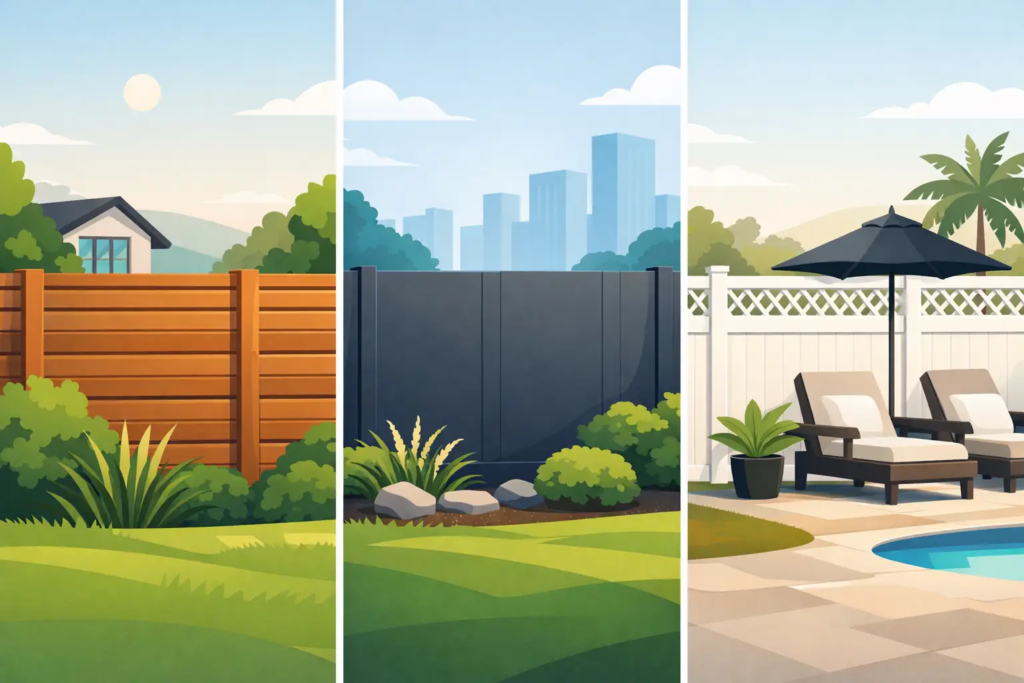
For many residential properties, wood is still the most popular answer to the privacy question. A well-built wood fence delivers full screening, classic appearance, and flexibility in design. It can be installed in a standard side-by-side style, board-on-board for tighter coverage, or with custom top trim and gate details that give the fence a more finished look.
One reason wood often ranks high is customization. It works with a wide range of home styles, and it can be built to fit unusual lot lines, slopes, and backyard layouts. If your goal is to create a private outdoor area that still feels natural and attractive, wood usually gets there better than many prefabricated systems.
That said, wood comes with trade-offs. It needs maintenance to keep its appearance and extend its service life. In Gulf Coast conditions, moisture and sun can take a toll over time. Posts, pickets, and rails need to be installed correctly from the start, or the fence may lean, twist, or age unevenly. When built with quality materials and proper craftsmanship, though, wood remains one of the strongest privacy fence options available.
Board-on-board vs. side-by-side
If privacy is the top priority, board-on-board construction deserves serious consideration. This style overlaps pickets so gaps stay more protected even as boards naturally expand and contract. It also improves privacy from angled views, which matters on corner lots or properties with close neighbors.
Side-by-side wood fencing can still provide good privacy and often comes at a lower upfront cost. It works well for many standard residential applications, but it is more likely to show small gaps over time. If complete screening matters, the upgrade to board-on-board is often worth it.
Vinyl can be the best fence for privacy if low maintenance matters most
Vinyl privacy fencing appeals to property owners who want a cleaner look with less ongoing upkeep. Unlike wood, vinyl does not need staining or painting, and it resists many of the issues that come with repeated moisture exposure. For busy homeowners and commercial properties, that lower maintenance requirement can be a major advantage.
Vinyl also delivers a very consistent appearance. Panels tend to look uniform, and that can be a benefit if your goal is a polished perimeter with minimal variation. In neighborhoods where appearance standards matter, vinyl often checks the right boxes.
The main consideration is style and impact resistance. Some owners prefer the natural look of wood, while others like the crisp finish of vinyl. Depending on the specific product and installation quality, vinyl can also be less forgiving under heavy impact than a custom-built wood fence. It is a strong option, but the best fit usually comes down to your priorities between appearance, maintenance, and long-term repair expectations.
Metal fencing is rarely the first choice for full privacy
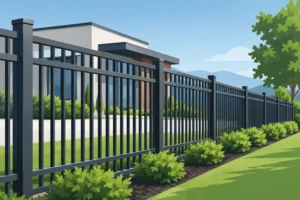
Wrought iron, aluminum, and similar metal fence systems offer security, visibility, and strong visual appeal, but they are not usually the best standalone answer for privacy. Their open design is part of their value. They define a boundary clearly and can elevate the look of a property, yet they do not block views the way solid fencing does.
That does not mean metal has no role in a privacy-focused project. Some commercial properties combine metal perimeter fencing with strategic screening in key areas. Some residential owners use metal at the front for curb appeal and a wood privacy fence in the backyard where seclusion matters more. If you want both elegance and privacy, a mixed-material plan can make more sense than forcing one fence type to do everything.
Masonry and brick offer maximum privacy and permanence
If the question is strictly about long-term solidity, masonry and brick perimeter fencing stand in a category of their own. These walls provide strong privacy, excellent noise buffering, and a substantial look that can enhance high-end residential or commercial properties.
They are also a larger investment. Construction costs are typically higher, installation is more involved, and the final design needs to suit the architecture of the property. For some owners, that investment is justified by durability, appearance, and security. For others, a quality wood or vinyl fence delivers the privacy they need at a more practical price point.
In short, masonry is often the premium option, not always the most efficient one.
Height, layout, and gates matter as much as material
A common mistake is choosing a fence material first and thinking privacy will take care of itself. In reality, height and layout often decide whether the fence actually solves the problem. A six-foot fence is standard for many backyards, but some properties benefit from taller sections where permitted, especially if nearby elevations or structures create direct sightlines.
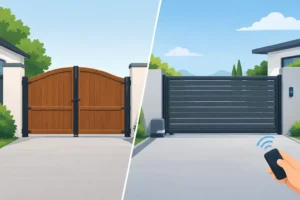
Gate placement matters too. A beautifully built fence can lose privacy if the gate design leaves large visibility gaps or if side-yard transitions are handled poorly. Sloped lots also need careful planning so the fence follows grade without opening spaces underneath.
This is where custom installation makes a difference. A privacy fence should be built for the specific property, not treated like a one-size-fits-all panel job.
Climate and local conditions should guide your decision
In Houston-area communities, fencing has to handle demanding weather. Heat, humidity, heavy rain, and occasional storm pressure all test a fence over time. That means the best fence for privacy is not only the one that looks right on paper. It is the one that can hold up well in local conditions with the right materials and construction methods.
For wood, that may mean choosing the right lumber and post installation approach. For vinyl, it means selecting a product built for outdoor durability, not just appearance. For any privacy fence, hardware, gate framing, and structural support all matter more than many buyers realize at the start.
A fence is only as dependable as the way it is built. Even the best-looking design will disappoint if the posts are weak, the alignment is rushed, or the gate starts sagging early.
So, what is the best fence for privacy?
For most homeowners, a professionally built wood privacy fence is still the strongest overall choice because it balances appearance, customization, coverage, and value. If lower maintenance is your top concern, vinyl may be the better fit. If you want maximum permanence and a more substantial boundary, masonry or brick may be worth the investment.
The right answer depends on your property, your budget, and how you want the fence to perform five or ten years from now, not just this season. That is why many owners benefit from a site-specific recommendation instead of picking a material based on photos alone.
At Delta Fence and Construction, privacy fence projects are approached with that bigger picture in mind – not just how the fence looks, but how it functions, holds up, and complements the property. When your fence is built with the right material and the right plan, privacy feels like a lasting upgrade, not a temporary fix.
If you are weighing your options, start with the problem you want the fence to solve. The best result usually comes from matching the fence to the property, not forcing the property to fit the fence.