A break-in attempt often starts with a simple question: where is the easiest way in? An effective secure fence for business removes the obvious answers. It defines the property line, limits unauthorized access, protects valuable equipment, and gives employees and customers a clearer sense of where they belong.
For commercial property owners, fencing is not a one-material decision. A warehouse yard, medical office, retail center, contractor storage lot, and apartment community all face different security concerns. The right solution balances perimeter protection, gate access, visibility, appearance, maintenance, and the daily use of the property.
Start With the Risks on Your Property
The best fence design begins with the job it needs to do. A business with trailers, tools, inventory, or fleet vehicles may need a taller perimeter fence and controlled vehicle gates. A professional office may prioritize a polished boundary that deters trespassing without making the property feel closed off. A property manager may need to direct pedestrian traffic while maintaining visibility around parking areas and entrances.
Walk the site with practical questions in mind. Where do employees, deliveries, customers, and service vendors enter? Are there blind corners behind the building? Is equipment stored outdoors? Does the property back up to an open lot, wooded area, drainage easement, or busy street? These details affect fence height, material, gate placement, and whether the fence should allow clear sightlines.
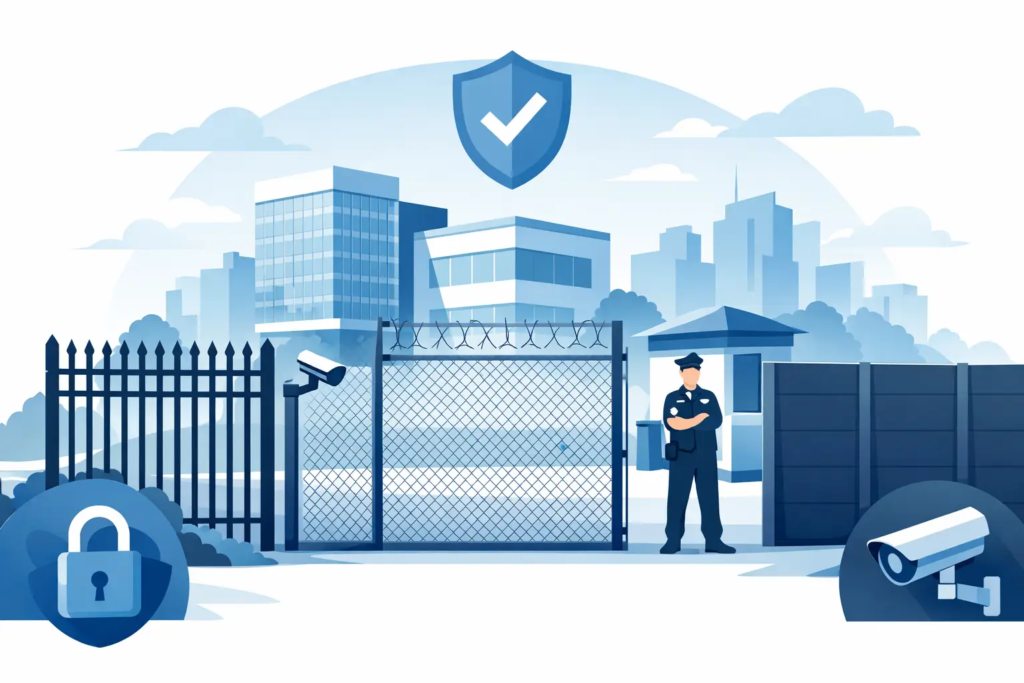
Security is also about response time. A fence does not replace lighting, cameras, alarms, or attentive property management. It gives those systems a better chance to work by slowing access, guiding traffic through defined entry points, and discouraging casual trespassing before it becomes a larger issue.
Secure Fence for Business: Match Material to the Job
Different fencing materials offer different advantages. The strongest choice is the one that fits the property’s risk level and the image the business needs to project.
Chain Link for Reliable Perimeter Coverage
Commercial chain link remains a practical option for storage yards, service areas, industrial sites, athletic facilities, and locations where visibility matters. It is durable, cost-conscious for larger perimeters, and available in multiple heights. A heavier commercial-grade framework and properly tensioned fabric make a substantial difference in long-term performance.
For higher-security locations, chain link can be paired with privacy slats, windscreen material, barbed wire where appropriate and permitted, or an added gate access system. Privacy additions reduce visibility into the yard, but they also create more hidden areas from the street. That trade-off should be considered alongside lighting and camera coverage.
Ornamental Steel and Wrought Iron for Visible Security
Ornamental steel and wrought iron-style fencing provide a more refined look while establishing a clear, difficult-to-cross boundary. They are well suited to office buildings, medical facilities, multifamily properties, schools, churches, and businesses where curb appeal matters as much as perimeter control.
The open design supports visibility, which can be useful for monitoring parking areas and building approaches. Picket spacing, height, rail configuration, and gate design can be customized to strengthen security without overwhelming the architecture of the property. This option usually requires a larger initial investment than standard chain link, but it delivers a durable, professional appearance that complements many commercial properties.
Aluminum for Attractive, Low-Maintenance Boundaries
Aluminum fencing offers a clean, open appearance and resists rust in Houston-area heat, humidity, and rain. It works well around office landscaping, pools, common areas, and lower-risk perimeters where appearance and low maintenance are priorities.
It is not usually the first choice for a high-impact industrial yard or a location with repeated forced-entry concerns. However, when paired with a properly designed gate and good access control, aluminum can be an excellent solution for businesses that need a clear boundary without a heavy visual footprint.
Wood, Brick, and Privacy Fencing for Screening
Wood privacy fencing, metal privacy panels, and brick perimeter walls can limit views into dumpsters, loading areas, mechanical equipment, and employee spaces. Screening may improve the property’s appearance and reduce the temptation created by visible tools or materials.
The trade-off is visibility. Solid fencing can conceal valuable assets from passersby, but it can also limit views from cameras and nearby streets. The design may need strategically placed lighting, secured service gates, or a combination of solid and open fencing to avoid creating hidden access points.
Gate Design Is Where Security Often Succeeds or Fails
A strong fence with a poorly planned gate leaves the property vulnerable. Gates should fit how the business actually operates, not just how the site looks on a drawing. A delivery entrance may need a wide double swing gate or a cantilever slide gate, while an employee entrance may need a pedestrian gate with a self-closing, self-latching mechanism.
Access control can range from locks and keyed entry to keypad systems, card readers, intercoms, and remote-operated gates. The right level depends on the number of users, hours of operation, visitor volume, and the value of assets on site. A gate that is too complicated may be propped open by frustrated employees. One that is too basic may not provide enough control.
Vehicle gates need careful clearance planning. Account for delivery trucks, trailers, turning radiuses, fire access, drainage, and the space needed for a swing gate to operate. Sliding and cantilever gates are often useful where a swinging gate would block traffic or extend into a driveway.
Height, Layout, and Installation Quality Matter
Fence height should reflect the security goal, local requirements, and the surrounding environment. A low decorative fence may guide visitors but does little to prevent entry. Taller commercial fencing creates a stronger physical and visual deterrent, particularly around equipment yards and restricted areas.
Layout matters just as much. A fence should connect cleanly to buildings, walls, and other fixed boundaries without leaving easy gaps. Corners, gate posts, and terminal posts need the structural support to handle tension, impact, and repeated use. On uneven ground, the fence must be designed to follow or step with the grade while maintaining appropriate clearance below the fence line.
Quality installation is not cosmetic work. Proper post depth, concrete footings, bracing, hardware, drainage consideration, and aligned gates determine whether a fence stays secure through storms, heavy use, and changing soil conditions. In coastal Texas and the Houston area, moisture, wind, and expansive soil make experienced site evaluation especially valuable.
Plan for Maintenance Before Problems Start
Commercial fencing should be inspected regularly, particularly after severe weather, vehicle contact, or construction activity nearby. Look for leaning posts, loose fittings, damaged mesh or panels, sagging gates, worn hinges, malfunctioning operators, and gaps below the fence.
Small repairs protect the larger investment. A gate that drags can strain hinges and operators. A loose section of chain link can become an easy access point. Rust, damaged coatings, or shifting posts should be addressed before they affect the whole perimeter.
For properties with frequent traffic, assign responsibility for checking gates at opening and closing. Employees should know who to contact if a latch will not engage, an access device fails, or a vehicle damages the fence. Security depends on consistent daily use as much as it depends on material strength.
Build a Boundary That Works for Your Business
A commercial fence should protect what matters without interfering with normal operations or weakening the look of the property. That may mean a chain link perimeter around a service yard, ornamental fencing at the street frontage, privacy screening around equipment, and purpose-built gates at each access point.
Delta Fence and Construction helps business owners in League City, Friendswood, Clear Lake, and nearby communities evaluate these choices from the ground up. The most effective result is a custom plan built around the property, the people who use it, and the level of protection required.
Before choosing a design, stand at each entrance, corner, and outdoor storage area after business hours. The weak point is rarely just the fence itself. It is usually the place where the fence, gate, lighting, and daily routines fail to work together.