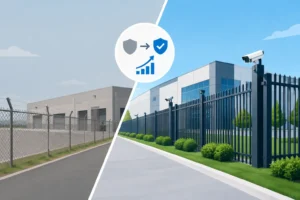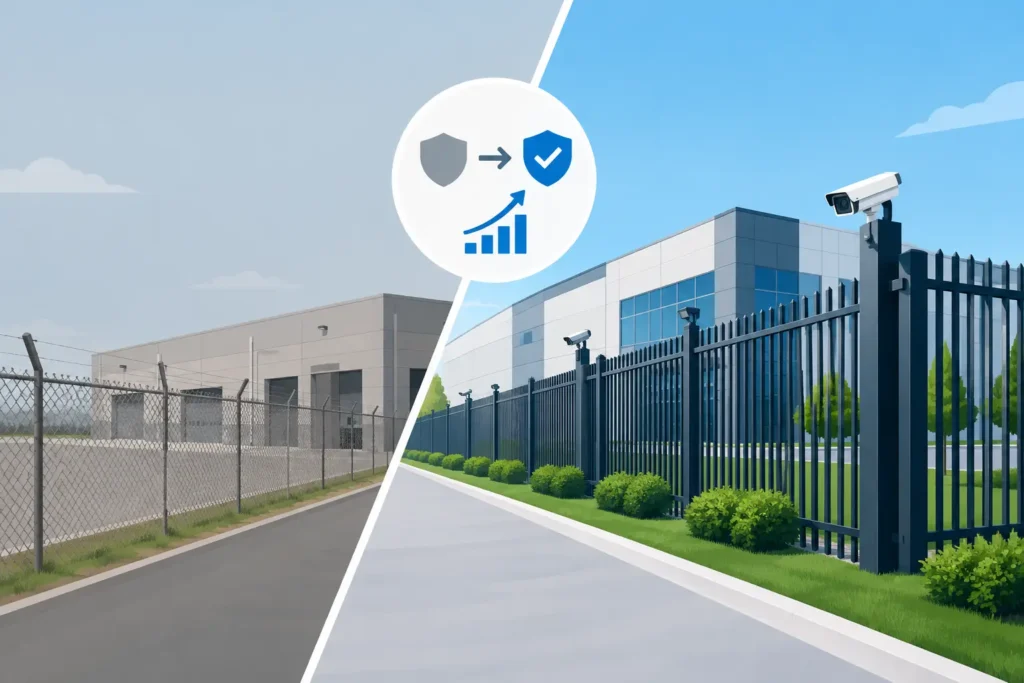
A damaged perimeter does more than make a commercial property look neglected. It creates unclear boundaries, weakens access control, and can leave equipment, inventory, and employees more exposed than they should be. This commercial perimeter upgrade case study examines how a tailored fence and gate plan helped a Texas commercial property replace a failing boundary with a cleaner, more secure system built for daily use.
To protect client privacy, the property details have been generalized. The project reflects the type of work commercial owners and property managers often need when an aging fence no longer matches the demands of the site.
The Problem: An Aging Fence Was No Longer Doing Its Job
The property had an existing chain link perimeter that had been repaired several times over the years. Sections were leaning, the bottom of the fence had separated from the ground in places, and the vehicle gate was difficult to operate. The fence still marked the property line, but it did not present a reliable first layer of security.
The site also faced a common commercial challenge: the perimeter had to be secure without making daily operations harder. Employees and authorized vendors needed dependable entry. Managers wanted clearer sightlines around the lot. The new fence also needed to look professional from the street, where customers and visitors could see it.
A full replacement made more sense than another round of patch repairs. Repairing isolated sections can be a practical short-term option when the structure is sound, but it is rarely the best value when posts, fabric, gate hardware, and alignment are all failing at once.
Commercial Perimeter Upgrade Case Study: The Site Plan
The first step was a detailed site review. Commercial fencing is not a one-size-fits-all installation, especially when access points, vehicle traffic, drainage, and property visibility all affect the design.
The planning process focused on four areas:
- Identifying the actual perimeter line and locating damaged or unstable sections
- Determining where pedestrian and vehicle access needed to remain open during construction
- Selecting materials that could handle regular use and Houston-area weather conditions
- Designing gate locations and widths around the equipment and vehicles using the site
The property owner chose a commercial-grade chain link fence with upgraded framework and a new vehicle gate system. Chain link was the right fit because it offered clear visibility across the property, durable boundary protection, and a practical cost compared with a full masonry or ornamental metal enclosure.
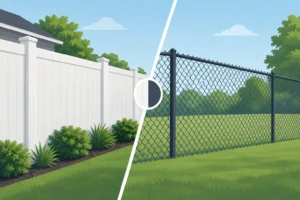
This choice involved a real trade-off. Chain link does not provide the privacy of a wood or vinyl-style fence, and it does not create the decorative statement of wrought iron or aluminum. For this site, however, visibility was an advantage. Managers could see activity near the perimeter, and the fence provided a defined barrier without closing off views of the lot.
Why the Framework Matters as Much as the Fence Fabric
Commercial fence performance depends heavily on what holds the system in place. Fence fabric may be the most visible component, but posts, rails, fittings, concrete footings, and gate hardware determine whether the perimeter stays aligned over time.
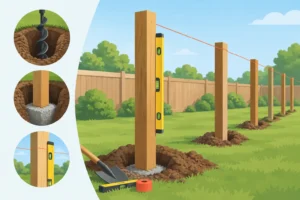
For this upgrade, the installation plan called for properly spaced steel posts set in concrete, top rails to keep the line stable, and tensioning components sized for commercial use. The goal was to create a fence that would remain straight and secure through wind, weather, and frequent gate activity.
Corners and gate posts received special attention. These points carry more stress than a standard line post, particularly when a gate is opened and closed throughout the day. A gate can only perform well when its supporting posts are properly installed and its hardware matches the gate’s weight and width.
This is where a custom contractor approach matters. A standard panel or undersized gate may appear acceptable on installation day, then begin sagging or dragging after repeated use. Building the gate and support system around the site’s actual traffic pattern helps prevent that problem.
Managing Access During Construction
A commercial fence replacement cannot ignore the work happening inside the property. The business still needed deliveries, employee access, and safe movement around the lot while installation was underway.
The crew completed the work in planned sections rather than removing the entire perimeter at once. This kept the site more controlled throughout the project and allowed the property manager to coordinate access with the work schedule. Temporary openings were used where needed so that authorized vehicles could continue entering the property.
The old fence was removed carefully, damaged posts were extracted, and the site was prepared for the new layout. Once the new posts were installed and allowed to set, the fence fabric, rails, and gates were added in sequence. This approach takes coordination, but it is preferable to creating an open, unprotected site for several days.
The Gate Upgrade Changed Daily Operations
The most noticeable improvement for the property team was the new vehicle gate. The old gate had become a daily frustration. It dragged across the ground, required extra effort to open, and did not consistently close in the proper position.
The replacement gate was built to match the opening and the type of traffic using it. Gate width, swing clearance, hinges, latch placement, and ground conditions were all considered before installation. The result was an access point that could be operated more reliably and secured at the end of the day.
For some commercial properties, a swing gate is the right answer. For others, especially sites with limited swing clearance or frequent vehicle traffic, a sliding gate may be a better choice. Automated access can also make sense when a property needs controlled entry after hours. The correct option depends on how the site is used, not simply on what looks best in a catalog.
The Result: A Clearer, More Professional Boundary
Once the project was complete, the property had a straight, consistent perimeter that better reflected the way the business operated. The upgraded fence defined the site more clearly, improved the appearance of the frontage, and gave management a more dependable boundary around vehicles and equipment.
The value was not limited to appearance. The new system reduced the weak points created by leaning sections, loose fabric, and a failing gate. It also made routine oversight easier because sightlines along the perimeter were cleaner and the access point worked as intended.
A commercial fence is not a guarantee against every security concern. Lighting, cameras, access procedures, and employee practices all play a part in protecting a property. Still, a well-built fence and gate system establishes the physical boundary those other measures depend on.
What Property Managers Can Take From This Project
The main lesson from this commercial perimeter upgrade case study is that waiting until a fence fully fails usually limits your options. When managers plan an upgrade before a gate becomes unusable or a boundary opens up, they can choose materials and scheduling based on long-term needs rather than immediate pressure.
It also pays to evaluate the entire system. Replacing fabric while keeping unstable posts or worn gate hardware can leave the underlying issue unresolved. Conversely, a complete replacement may be unnecessary when the framework is sound and only a small section has been damaged. A site assessment should identify the condition of each component before a decision is made.
For Houston-area commercial properties, material selection should also account for wind, rain, soil movement, and the level of daily traffic. The best fence is the one that fits the property’s security needs, operating conditions, budget, and appearance goals at the same time.
Delta Fence and Construction approaches commercial projects with that full-picture mindset. A properly planned perimeter should give owners and managers confidence each time they lock the gate, open the lot, or welcome a customer onto the property.
If your commercial fence has begun leaning, separating, rusting, or creating access problems, treat those signs as an opportunity to plan a better boundary before a minor issue becomes an operational disruption.