A pool fence has a job that goes far beyond marking the edge of the water. It needs to create a dependable safety barrier, control access, hold up to heat and humidity, and still look like it belongs with the home. The best fence styles for pools balance those needs instead of forcing homeowners to choose between protection and appearance.
For pool owners in League City, Friendswood, and Clear Lake, material selection matters. Salt air near the coast, high humidity, strong sun, and frequent rain can all shorten the life of a poorly chosen fence. A well-planned pool enclosure should account for the local climate, the layout of the yard, visibility needs, and applicable pool barrier requirements before installation begins.
Start With Safety and Access
Every pool fence decision should begin with safety. Local requirements can vary by municipality, neighborhood, and property type, so the final design should be confirmed against the rules that apply to your address. In general, a pool barrier needs adequate height, limited climbability, appropriately spaced openings, and a self-closing, self-latching gate that helps prevent unsupervised access.
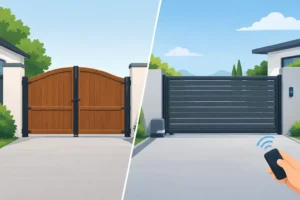
The gate deserves as much attention as the fence itself. A beautiful enclosure is not doing its full job if the gate drags, fails to latch, or can be left open accidentally. Gate placement should also make daily use practical. Homeowners often benefit from one primary access gate from the house or patio, while larger yards may need a second service gate for maintenance equipment.
Visibility is another key safety consideration. Being able to see the pool from the patio, kitchen, or living area can make it easier to monitor activity. That is one reason open-style metal fences remain a popular choice around residential pools.
Best Fence Styles for Pools: Top Options
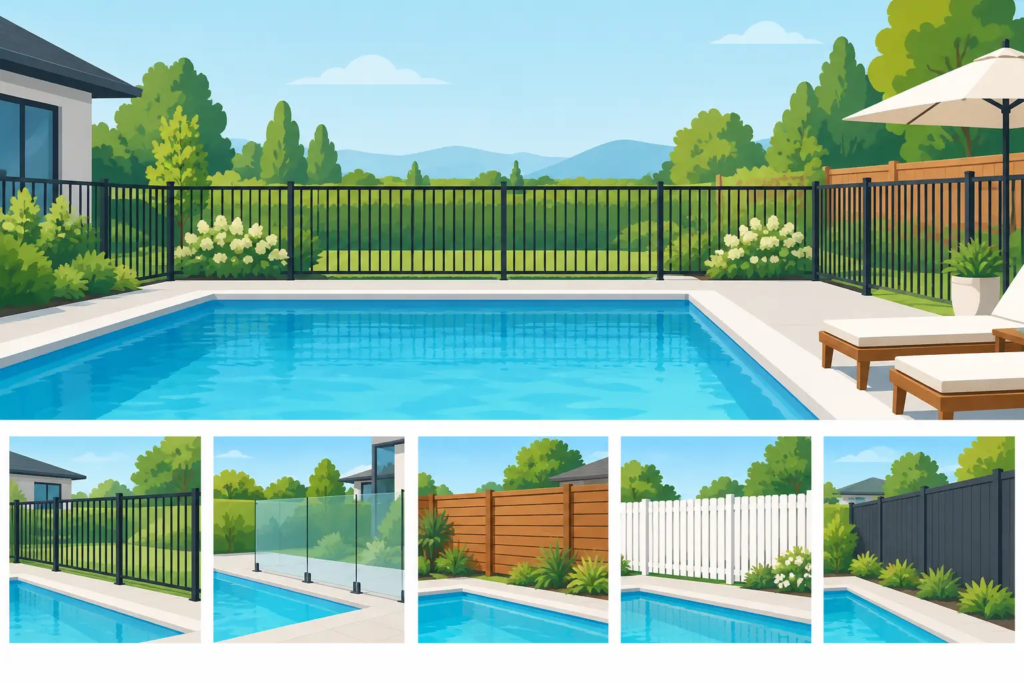
There is no single best material for every pool. The right choice depends on whether your highest priority is open visibility, complete privacy, architectural character, low maintenance, or a combination of all four.
Aluminum Fence: Clean, Open, and Low Maintenance
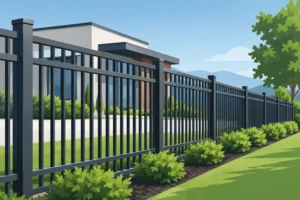
Aluminum fencing is one of the strongest all-around options for pool enclosures. Its open picket design preserves sightlines, allowing parents and guests to see the pool area without creating a heavy visual boundary. It also gives a backyard a polished, finished appearance without blocking breezes.
Quality aluminum fences resist rust, which is a major advantage in humid Gulf Coast conditions. Powder-coated finishes are available in classic black, bronze, white, and other colors that can coordinate with the home, patio furniture, or landscape design. Aluminum can be customized with different picket spacing, rail profiles, decorative finials, and arched gates.
The trade-off is privacy. Aluminum fencing is designed to be seen through, so it will not shield swimmers from neighboring properties. It is an excellent choice when visibility and low upkeep matter more than seclusion.
Wrought Iron-Style Fence: Traditional Strength and Detail
Wrought iron fencing brings a more substantial, formal look to a pool area. It works especially well with brick homes, traditional architecture, and properties that already feature iron railings, gates, or exterior lighting. Custom metalwork can create a distinctive enclosure that feels built specifically for the property rather than selected from a standard panel.
True wrought iron and ornamental steel require proper finishing and ongoing care to prevent corrosion. In a humid Texas climate, surface damage should be addressed promptly and finishes should be maintained as needed. For homeowners who value architectural detail and long-term visual impact, that maintenance can be well worth it.
A custom iron gate can also become a focal point of the pool entrance. The key is to pair the decorative design with reliable self-closing and self-latching hardware that supports safe day-to-day use.
Privacy Fence: Seclusion for Close Neighbors
A wood privacy fence can make a pool feel like a private retreat, particularly on lots with close neighboring homes or highly visible backyards. Solid-board construction blocks unwanted views, reduces the feeling of exposure, and creates a backdrop for landscaping, lighting, or outdoor living features.
Wood offers substantial design flexibility. Homeowners can choose vertical boards, horizontal boards, board-on-board construction, decorative top caps, lattice accents, or custom stain colors. A properly built wood fence has warmth that metal fencing cannot duplicate, and it can tie a pool enclosure into an existing backyard fence line.
The trade-off is maintenance and visibility. Wood needs periodic inspection, cleaning, staining, or sealing to protect it from moisture and sun exposure. A solid fence also prevents clear views into the pool area from outside the enclosure. Some homeowners solve this by using privacy fencing along the property line and an open aluminum or iron-style barrier closer to the water.
Masonry or Brick Perimeter Walls: Permanent and Private
Brick and masonry perimeter walls deliver a high-end look along with excellent privacy and durability. They are well suited to homes with brick exteriors, formal outdoor kitchens, or established hardscape features. A masonry wall can make a pool area feel enclosed and intentional while providing a durable boundary that stands up well over time.
This option requires careful planning because it is more permanent and typically involves a larger investment than a standard fence. Drainage, wall height, access points, and the transition between masonry and gates all need to be handled correctly. Many properties benefit from using brick columns or short masonry sections with aluminum panels between them, giving the enclosure both visual openness and architectural weight.
Wood and Metal Combination Fences: A Custom Solution
A combination design is often the answer when one material cannot meet every need. For example, a homeowner may use a wood privacy fence along the sides and rear of the yard, then install aluminum fencing around the immediate pool zone. This creates separation from neighbors while keeping the water visible from the patio or house.
Another option is brick columns with ornamental metal panels, or a stained wood fence with a custom metal gate. These combinations can match existing exterior finishes and make the pool area feel connected to the rest of the property. The design needs to be planned as one system, with consistent heights, gate hardware, and transitions between materials.
Styles That Need Extra Consideration
Chain link fencing can be practical, economical, and durable, particularly for large properties or temporary needs. However, standard chain link is usually not the first choice for a residential pool enclosure because it offers limited privacy and may not provide the finished appearance many homeowners want near an outdoor living area. Vinyl-coated chain link and privacy slats can improve its appearance, but the final design still needs to meet pool barrier requirements.
Farm and ranch fencing is generally designed for boundary definition or livestock containment rather than pool safety. Its open rails and wider gaps can create climbability and access concerns. It may work well around the larger property perimeter, but a dedicated, code-conscious pool barrier should remain separate from it.
Plan the Fence Around How You Use the Backyard
The most attractive pool fence is one that supports the way your household actually uses the space. If children and pets use the yard regularly, prioritize controlled access and dependable gate operation. If you entertain often, consider how guests will move between the house, patio, grill, and pool without creating bottlenecks at the gate.
Think about maintenance access early. Pool equipment, landscaping crews, and future repairs may require a wider gate or a clear route into the enclosure. This is easy to overlook during design and frustrating to correct after installation.
Also consider the view from inside the home. An open aluminum enclosure may preserve a clear view of the pool, while a privacy fence can create a more secluded setting. Neither approach is automatically better. It depends on lot size, neighboring sightlines, landscaping, and how much visibility matters to your family.
Get the Details Right Before Installation
Fence materials matter, but installation quality determines how the finished enclosure performs. Posts must be set correctly, gates must align and close reliably, and every transition at a wall, deck, or existing fence must avoid unwanted gaps. A custom design also needs to account for slopes, drainage patterns, and irregular property lines.
Delta Fence and Construction helps Houston-area property owners build pool fencing that is secure, attractive, and tailored to the property. The right conversation starts with your safety needs, preferred style, and the practical realities of your yard.
A pool should be a place where people can relax with confidence. Choose a fence style that protects access to the water, fits the character of your home, and is built to keep doing its job through years of Texas weather.