A fence can look perfectly sound from a distance, then reveal a post tilting a few inches off line when you walk the yard. That lean is more than a cosmetic issue. If you are asking, why do fence posts lean, the answer usually involves movement below ground, deterioration at ground level, or pressure the fence was not built to carry. Catching the cause early can prevent sagging gates, loose panels, and a larger replacement project.
For homeowners and property owners in the Houston area, wet periods, heavy clay soil, heat, and storms can all put added stress on a fence line. The right repair depends on why the post moved in the first place. Straightening a post without correcting the underlying issue often means it will lean again.
Why Do Fence Posts Lean Over Time?
Fence posts are expected to hold a lot of weight while resisting wind, moisture, soil movement, and everyday use. A privacy fence also acts like a sail during strong winds, transferring force from the panels and rails directly into each post. When one post loses support, the adjoining sections can begin pulling out of alignment as well.
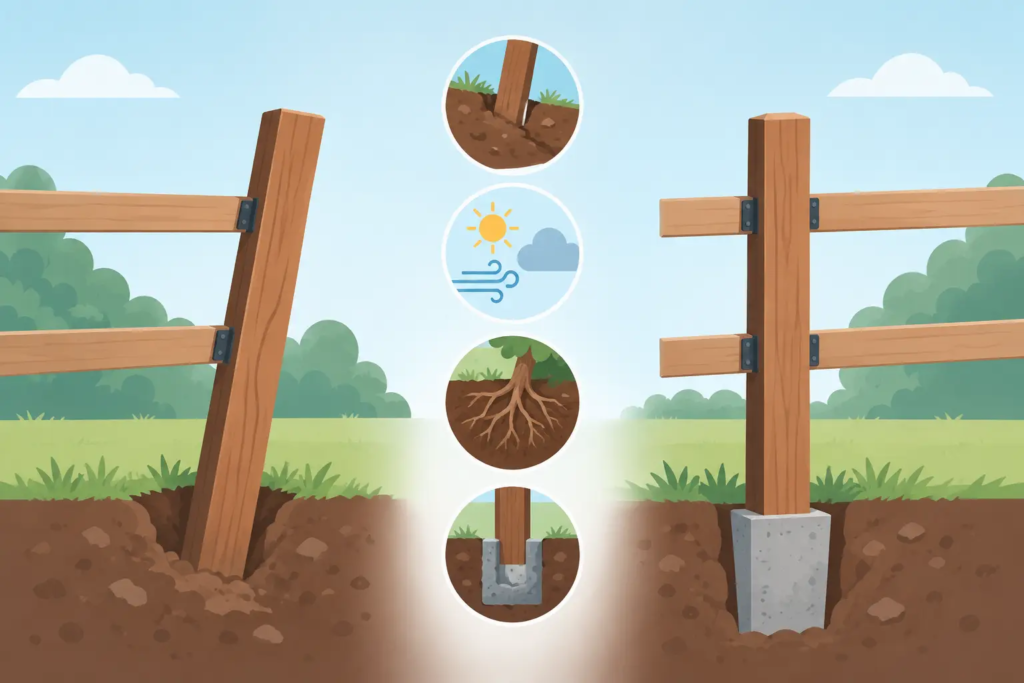
Loose, shallow, or poorly compacted soil
A post needs firm support on every side. If the original hole was too shallow, too wide without adequate backfill, or filled with loose soil that was never compacted, the post can shift gradually. Rainwater may soften the surrounding ground, while dry conditions can cause certain soils to shrink and pull away from the post.
This is especially common in clay-heavy areas. Clay expands when wet and contracts when dry. Over repeated weather cycles, that movement can push a post out of position or leave it with too little lateral support. A fence may start with one subtle lean and become noticeably uneven after a particularly wet season.
Rot at or below ground level
Wood posts often fail where they meet the soil. That area is exposed to moisture, insects, fungi, and limited airflow. Even a pressure-treated post has a service life, particularly when drainage is poor or the post remains wet for long periods.
Rot is not always obvious from the surface. The visible portion of the post may still look solid, while the buried section has softened or narrowed enough to lose its strength. Check for crumbly wood, deep cracks, dark discoloration, or a post that moves when pushed. If the wood is structurally compromised, adding a brace may delay the problem but will not restore the post’s original holding capacity.
Inadequate concrete footing
Concrete can provide excellent support, but only when the footing is sized and installed correctly. A small concrete plug near the bottom of a shallow hole may not be enough to counter wind pressure or the weight of a gate. Poorly mixed or cracked concrete can also lose its grip over time.
There is a trade-off here. Concrete keeps a post stable, but it can also trap water against wood if the top of the footing is flat or cupped around the post. A properly shaped footing should shed water away from the post rather than collect it at the base. For this reason, installation method matters as much as whether concrete is used at all.
Water and drainage problems
Standing water around a fence is a warning sign. Downspouts that discharge next to the fence, low spots in the yard, irrigation overspray, and poor grading can saturate the soil around posts. Saturated ground loses stability, and constant moisture accelerates wood decay.
Water can also wash away soil around a post, creating small voids that are easy to miss until the post begins moving. If the fence leans in the same area where water pools after rain, drainage correction should be part of the repair plan. Replacing the post alone may not solve the problem.
Wind, storms, and impact damage
A strong storm can place sudden, uneven pressure on a fence line. Privacy panels, solid gates, and tall sections are especially vulnerable because they catch more wind. One weak post can transfer the load to the next one, leaving several posts tilted in the same direction.
Impact damage has a similar effect. A riding mower, vehicle, falling branch, or heavy equipment can shift a post or crack its footing. In commercial, farm, and ranch settings, livestock pressure and repeated gate use can contribute to gradual movement as well.
Heavy or improperly supported gates
Gate posts carry more stress than standard line posts. Every time a gate opens and closes, its weight pulls against the hinge post. If that post is undersized, not buried deeply enough, or set in unstable soil, it may lean inward and cause the gate to drag, bind, or refuse to latch.
A gate issue should not be treated as a simple hardware adjustment until the posts are inspected. Tightening hinges on a leaning post can make the gate operate temporarily, but it does not resolve the structural load problem.
How to Tell Whether a Leaning Post Can Be Repaired
Start by looking at the direction and location of the lean. A single post that has shifted slightly but remains solid may be repairable. A row of posts leaning together often points to wind damage, soil movement, or a failing section of the fence framework.
Gently test the post by hand. Movement at the base, soft wood, visible cracking, or separation between the post and concrete are signs that a more substantial repair is needed. Also inspect the rails and pickets. If they are pulling loose, bowing, or placing pressure on nearby posts, the repair may need to address more than one component.
A temporary brace can help stabilize a post while you arrange repairs, particularly after storm damage. However, bracing is not a long-term answer for rot, a broken post, or a failed footing. The fence needs a stable foundation before its rails, panels, and gates can perform as intended.
Repair Options for Leaning Fence Posts
The right solution depends on the material, the condition of the post, and the reason it moved. For a sound post with a shallow shift, a contractor may excavate around the base, reposition it, compact new backfill, and reinforce it with a properly sized concrete footing. The fence line may need to be temporarily supported while the work is completed.
When rot is present, replacement is usually the better investment. Leaving a decayed post in place can put strain on otherwise healthy rails and panels. Replacing it allows the new post to be installed at the correct depth and alignment, protecting the rest of the fence section.
For gate posts, the repair may include a larger or deeper footing, stronger hinges, or a redesigned gate configuration that better matches the opening and gate weight. Metal posts can be a practical option for certain wood fence designs because they provide added resistance to rot and long-term movement. The best choice depends on the fence style, desired appearance, and the demands placed on that section of the property.
Preventing Posts From Leaning Again
Good fence performance begins before the first post is set. Posts should be selected for the fence type and load they will carry, installed at an appropriate depth, aligned carefully, and supported by properly prepared soil or concrete. Gates deserve additional planning because their posts do not carry the same load as the rest of the fence line.
Drainage also deserves attention. Direct roof runoff away from fence posts, correct low spots where practical, and avoid placing irrigation heads where they constantly soak the base of the fence. Regular inspections after storms can catch loose posts before wind and fence weight turn a small correction into a major repair.
For wood fencing, keep soil, mulch, and vegetation from building up against the post. A cleaner, drier area at the base helps you spot early deterioration and reduces conditions that promote decay. If a fence is older and several posts are beginning to fail, replacing individual posts one at a time may be less cost-effective than planning a targeted section replacement.
A leaning fence post is a signal to look below the surface, not just pull the fence back into line. A careful inspection and a repair built around stable footing, drainage, and proper support can restore the security, appearance, and dependable boundary your property deserves.