A pool can be the center of a Texas backyard, but the open space around it deserves just as much planning as the pool itself. Pool fencing creates a defined barrier between the water and the rest of the property while preserving the comfort, appearance, and access your family needs. The right fence should feel like part of the landscape, not an afterthought added after construction.
For homeowners in League City, Friendswood, and Clear Lake, the best choice often comes down to balancing safety requirements, visibility, weather resistance, and the way the backyard is actually used. A fence around a rarely used pool has different demands than one surrounding a busy family gathering space.
What a Pool Fence Needs to Do
A pool fence has one primary job: limit unsupervised access to the water. That purpose affects every part of the design, from the height and spacing of the fence to the type of gate and latch selected. A well-built barrier should be difficult for a child to climb, pass through, or open without an adult.
It also needs to work with the property. Some homeowners want a clear view from the patio, kitchen, or living room. Others need the fence to create stronger separation between the pool area, a play yard, pets, or outdoor entertaining space. In many backyards, the pool enclosure also becomes a visual feature, framing landscaping, decking, and the water itself.
Local requirements can affect fence height, gate operation, latch placement, and clearance at the bottom of the fence. Requirements vary by municipality, neighborhood, and project conditions, so it is wise to confirm the applicable rules before finalizing a design. Planning for compliance early is easier than adjusting a completed installation later.
Pool Fencing Materials and Their Trade-Offs
There is no single best material for every pool area. The right pool fencing depends on your desired level of visibility, maintenance tolerance, budget, and overall property style.
Aluminum fencing
Aluminum is a popular choice for pool enclosures because it offers a clean, open look without the maintenance demands of traditional iron. Its narrow pickets allow clear sightlines into the pool area, which can be especially valuable when adults want to monitor children from the house or patio. Quality powder-coated aluminum also stands up well to humidity and rain.
The trade-off is privacy. Aluminum fencing defines the space but does not hide it. Homeowners who want both visibility around the pool and screening along a property line may combine aluminum around the water with a privacy fence farther out in the yard.
Wrought iron and ornamental metal
Wrought iron-style and ornamental metal fencing give a pool area a more substantial, tailored appearance. These options work well with brick homes, formal patios, custom gates, and traditional landscape designs. They can be built with decorative details that make the enclosure feel intentional rather than purely functional.
Metal fencing needs proper finishing and installation to remain attractive in the Gulf Coast climate. A quality protective coating and prompt attention to scratches or damaged areas help prevent corrosion. For homeowners who value a strong architectural look, that maintenance is often worthwhile.
Glass pool barriers
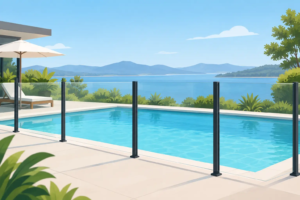
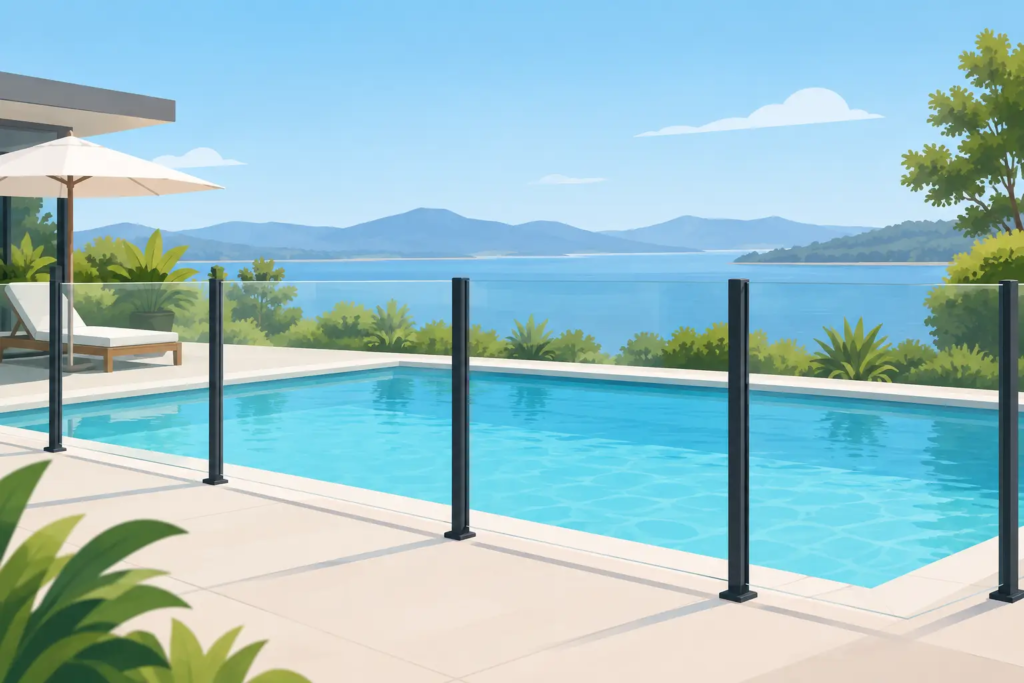
Glass panels offer the most open view of the pool and can create a modern, high-end finish around decks and patios. They are especially appealing where a conventional picket fence would interrupt a view of the water, landscaping, or a smaller backyard.
Glass does require regular cleaning to remove water spots, fingerprints, and debris. It is also a specialty installation that depends on precise measurements, properly engineered hardware, and careful consideration of drainage and deck conditions. It can be an excellent option, but it is not the lowest-maintenance choice.
Vinyl and wood fencing
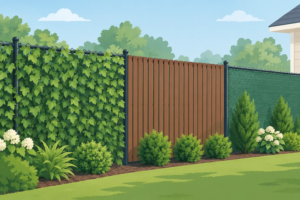
Vinyl and wood are often used as perimeter fencing rather than as the immediate pool barrier. Both can add privacy, reduce views from neighboring properties, and create a more secluded backyard setting. Vinyl offers a consistent finished appearance with relatively low upkeep, while wood provides warmth and broad design flexibility.
Solid-panel fencing can limit visibility into the pool area, so it may not be the preferred stand-alone solution for every family. It is frequently most effective when paired with a more open interior barrier or when the pool layout still provides reliable sightlines from the home.
Chain link fencing
Vinyl-coated chain link can be a practical solution for certain properties, especially where function, budget, and durability are the leading concerns. It can create a secure boundary without completely closing off the view. For residential pool areas where appearance is a major priority, however, many owners prefer aluminum, ornamental metal, or glass.
Start With the Layout, Not Just the Fence Style
The fence line determines how the pool area will function each day. Before selecting a material, consider the route people take from the house to the pool, where guests gather, where equipment is stored, and how landscaping will mature over time.
A compact enclosure around the pool may reduce the area a child can access without passing through a gate. It can also help keep leaves, pets, and lawn activity out of the immediate pool deck area. On the other hand, enclosing a larger patio and pool zone can create a more comfortable outdoor room for entertaining.
Avoid placing the fence where gates will open into furniture, grill areas, steps, or tight walkways. Also consider pool service access. A gate should be convenient for regular use while still allowing equipment, maintenance crews, or future repairs to reach the pool when necessary.
If the yard has slopes, retaining edges, drainage channels, or irregular deck elevations, those conditions should guide the design from the beginning. Small gaps beneath a fence may create both safety and code concerns. Custom fabrication and careful post placement can address challenging terrain without making the finished fence look pieced together.
The Gate Is the Most Important Detail
A strong fence is only as reliable as its gate. Pool gates should be self-closing and self-latching, with the latch positioned to reduce access by young children. The gate should swing away from the pool area when required by local code and should close consistently from every position, not only when gently released.
Hardware quality matters here. Hinges, latches, closers, and posts experience repeated use and outdoor exposure. Choosing commercial-grade components can prevent the sagging, sticking, and unreliable closure that often develop when gate hardware is undersized.
Homeowners should test the gate regularly after installation. Landscaping growth, deck movement, storm debris, and ordinary wear can affect alignment over time. A gate that no longer closes and latches completely needs attention right away.
Professional Installation Protects the Investment
A pool enclosure is not a project where appearance alone should determine quality. Posts need proper depth and secure footings. Panels must remain level and consistently spaced. Gates need accurate alignment, and all transitions around walls, deck edges, and grade changes need careful attention.
Professional installation also helps prevent common problems that show up later, such as loose posts, uneven pickets, wide bottom gaps, rusting hardware, or a gate that drags across the deck. A contractor can evaluate the site conditions, recommend materials suited to the property, and build the enclosure around the way your household uses the space.
Delta Fence and Construction approaches pool-area fencing as both a safety feature and a permanent property improvement. The goal is a finished barrier that performs reliably while matching the home, deck, landscaping, and surrounding fence design.
Keep the Pool Barrier Working Year After Year
Routine care is straightforward, but it should not be overlooked. Walk the fence line periodically and check for loose fasteners, damaged coatings, shifting posts, cracks in glass panels, or changes in ground level. Trim shrubs and tree limbs that could create climbing opportunities or interfere with gate operation.
Clean aluminum, vinyl, and glass according to the manufacturer’s recommendations. For metal fencing, inspect the finish for chips or scratches, particularly after storms or landscaping work. Addressing a small damaged area early is much easier than dealing with widespread corrosion later.
Most importantly, treat the pool fence as one part of a larger safety plan. Adult supervision, secure doors, properly stored pool equipment, and clear household rules all support the barrier around the water.
The right pool fence should give you confidence without making your backyard feel closed in. When material, layout, gate hardware, and installation are planned together, the result is a safer outdoor space that still feels built for relaxing, hosting, and enjoying the pool.