A fence has to do more than mark a property line. For many homeowners, businesses, and landowners, metal fencing must control access, protect people and equipment, contain animals, and still look appropriate from the street. The right system can handle all of those jobs for decades. The wrong one can create maintenance headaches, weak points at the gate, or a design that does not fit the property.
Metal is not one single fencing solution. Aluminum, steel, wrought iron-style ornamental fencing, chain link, and agricultural wire systems each solve different problems. Choosing well starts with identifying what the fence needs to do every day, not simply selecting a style from a photo.
What Metal Fencing Does Best
Metal fencing is often the best fit when strength, visibility, and long service life matter more than complete privacy. It creates a defined boundary without making a residential yard, commercial entrance, or ranch frontage feel closed in. It also gives property owners a wide range of design options, from simple utility fencing to decorative panels with custom gates and masonry columns.
For a home, ornamental metal can protect a pool area, frame a front yard, or secure a side yard while preserving the view. For a business, it can establish a controlled perimeter around parking areas, equipment, dumpsters, and storage. On acreage, the right steel or wire fencing can help manage livestock, define pastures, and protect access points.
The major advantage is durability, but durability depends on the material, finish, installation quality, and environment. A fence installed in the Houston area must stand up to heat, humidity, heavy rain, shifting soil, and, in some locations, salty coastal air. Posts, fasteners, welds, hinges, and gate frames deserve as much attention as the visible panels.
Choosing the Right Type of Metal Fence
The most attractive option is not always the most practical one. A successful fence design matches the material to the property’s priorities.
Aluminum for low-maintenance residential style
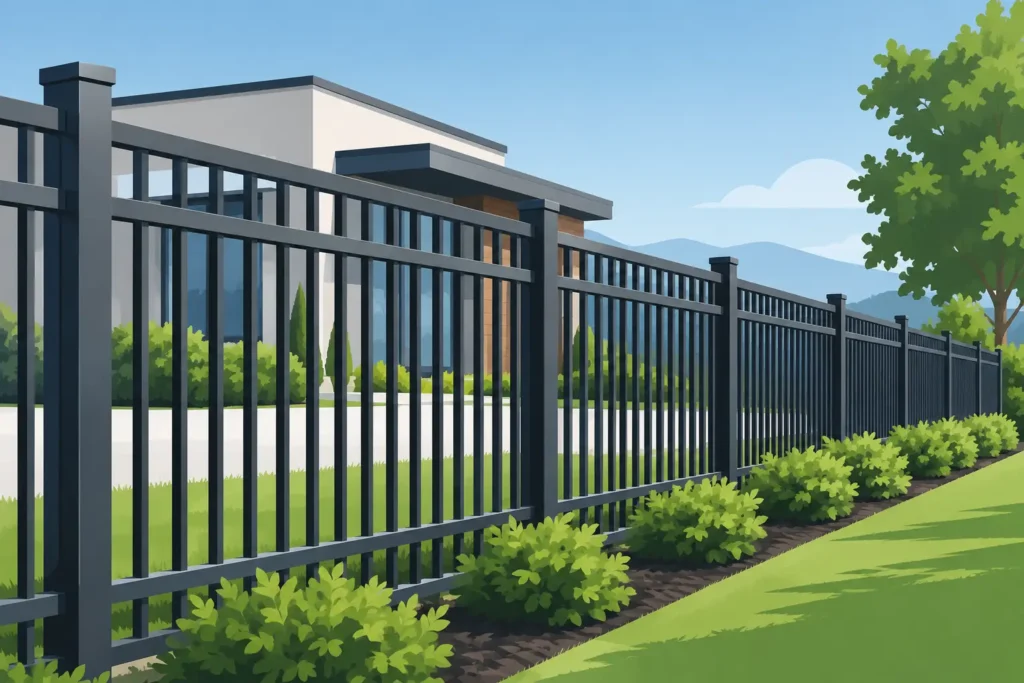
Aluminum fencing is a popular choice around homes, pools, and landscaped areas because it offers a clean ornamental appearance without the weight of steel. It does not rust, which makes it a practical option in humid and coastal-adjacent conditions. Its rackable panels can also follow a sloped yard more naturally than many rigid fence styles.
Aluminum is best for decorative boundaries, pool safety, and moderate security needs. It is not the first choice where impact resistance is the primary concern, such as a high-traffic commercial perimeter or an area vulnerable to vehicle contact. A well-built aluminum gate can perform well, but larger driveway openings often call for a heavier gate frame and carefully selected hardware.
Steel and ornamental iron for security and presence
Steel fencing provides greater strength and a more substantial feel. It is often selected for commercial properties, estate entrances, security-sensitive areas, and homes where a traditional iron look is part of the architectural style. Decorative pickets, finials, rails, and custom details can turn a functional perimeter into a major curb appeal feature.
Many property owners use the term wrought iron for this category, although modern ornamental fencing is commonly fabricated from steel. True wrought iron is less common and generally more specialized. What matters most is the quality of fabrication and protective coating. Properly finished steel can provide excellent long-term performance, while damaged coatings should be repaired before corrosion spreads.
Chain link for practical coverage
Chain link remains one of the most cost-effective ways to enclose a large area. It is widely used for backyards, dog runs, playgrounds, commercial lots, athletic areas, and temporary security needs. Galvanized chain link offers dependable utility, while vinyl-coated options can soften the industrial look and blend more easily into residential settings.
Privacy slats or screening can be added when visual separation is needed, but this changes how the fence responds to wind. In exposed areas, the post size, depth, and framework need to be designed for that added load. Chain link may not deliver the formal appearance of ornamental fencing, but it is hard to beat for straightforward, durable enclosure over a broad footprint.
Farm and ranch metal fencing for working land
Landowners need fencing that suits the animals, terrain, and daily operations. Cattle, horses, goats, and smaller livestock create different demands, and no single layout works for every property. Wire mesh, pipe rail, no-climb fencing, field fence, and barbed-wire systems each have a place when specified correctly.
Horse fencing, for example, should avoid sharp projections and use spacing that reduces the risk of legs becoming caught. Livestock fencing also needs properly planned gates, corners, braces, and access lanes. A fence line can look strong on installation day yet fail early if its corner assemblies and gate openings were not built to carry real tension and use.
Design Around Access, Not Just the Perimeter
Gates are where a fence becomes functional. They are also where poor planning is most obvious. Before installation, consider who needs access, how often they enter, what vehicles use the opening, and whether the gate needs to accommodate trailers, delivery trucks, landscaping equipment, or emergency access.
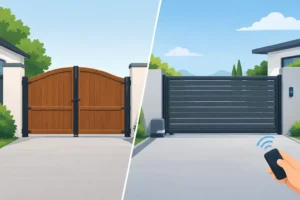
A walk gate should open comfortably without dragging, bind securely, and align with the natural path of travel. A driveway gate needs enough clear width and turning room for the vehicles that actually use it. For larger openings, double-swing or sliding gates may be appropriate. Automation can add convenience and access control, but the gate structure must be built to support the operator, wind load, and daily cycles.
Good design also anticipates details such as elevation changes, drainage paths, utility locations, retaining walls, and landscaping. A fence should not trap water against a structure or make future maintenance unnecessarily difficult. Custom fabrication allows a contractor to solve these site-specific issues instead of forcing a standard panel into a space where it does not belong.
Installation Details That Protect Your Investment
Quality materials cannot compensate for poor installation. Metal fence posts need the correct depth, spacing, and concrete footing for the fence height, soil conditions, and expected load. Gate posts typically require more substantial support because they carry concentrated weight and repeated movement.
Alignment matters as well. Straight runs, level rails, consistent picket spacing, and secure connections create the polished appearance people expect from metal fencing. More importantly, they prevent rattling sections, sagging gates, and uneven stress that can shorten the life of the system.
For steel fencing, coating protection is a central part of the installation. Powder-coated or galvanized components help resist corrosion, but cuts, scratches, and welded areas should be addressed with the appropriate touch-up process. Mixing metals without suitable hardware can also lead to corrosion issues over time. An experienced fence contractor evaluates the complete system, not just the panels.
Maintenance Is Simple, Not Optional
One reason property owners choose metal is that it requires less maintenance than many alternatives. Less maintenance does not mean no maintenance. A quick inspection once or twice a year can catch minor issues before they become expensive repairs.
Check for loose fasteners, chipped finishes, leaning posts, rust spots, damaged mesh, and vegetation pressing against the fence. Keep hinges clean and lubricated, especially on frequently used gates. Clear soil buildup and standing water from the base of the fence, and trim shrubs or vines that hold moisture against coated metal.
If a steel finish is scratched, clean the area and apply a compatible protective coating promptly. For chain link, inspect tension and ties after storms or impact. Gates should be adjusted when they first begin to sag rather than after the latch no longer aligns. Small repairs protect the structure and preserve the appearance of the entire property.
When Metal Is Not the Complete Answer
Metal fencing offers visibility, not full privacy. If privacy is the primary goal, a wood fence, masonry wall, or a combined design may be a better fit. Many properties benefit from metal fencing at the front or around a driveway, paired with privacy fencing along rear and side yard lines.
Budget is another factor. Ornamental steel and custom gates generally cost more upfront than basic chain link or standard wood fencing. However, a higher initial investment can be reasonable when the fence improves security, reduces replacement needs, and supports the property’s long-term appearance. The right answer depends on the site, the required level of security, and how the space will be used.
Delta Fence and Construction helps property owners build metal fence systems around those real-world requirements, from decorative residential boundaries to commercial enclosures and working ranch fences. Start with a clear plan for access, security, appearance, and maintenance, then choose a design built to perform well long after installation day.