A commercial gate that opens slowly, stops unpredictably, or cannot handle daily traffic is more than an inconvenience. It can delay deliveries, frustrate tenants, create security gaps, and put added strain on staff. This guide to commercial gate operators explains what property owners and managers should consider before selecting an automated gate system built for dependable daily use.
The right operator is not simply the strongest motor available. It must match the gate style, gate weight, opening frequency, entry requirements, site conditions, and safety needs of the property. A well-built gate and properly matched operator work as one access-control system.
Start With the Property’s Actual Needs
Commercial properties have very different access patterns. A warehouse may need trucks to enter during scheduled delivery windows. A multi-tenant business park may need controlled access throughout the day. A ranch entrance may need to accommodate trailers while keeping livestock and unauthorized vehicles out. A self-storage facility may require dependable access around the clock.
Begin by identifying who uses the entrance, how often they use it, and what types of vehicles must clear the opening. Gate width matters, but so do turning radiuses, trailer lengths, grades, drainage, and available space beside or behind the gate. A gate that works on paper can become difficult to operate when a delivery truck cannot safely approach it.
Also consider the level of security required. Some sites only need a controlled entrance during business hours. Others need credential-based entry, visitor call boxes, camera integration, and automatic closing after every vehicle passes through. The operator should support the system your property needs now while allowing practical upgrades later.
Choose the Right Commercial Gate Operator Type
The gate design usually determines the most suitable operator. However, the surrounding site can change that decision. Available room, wind exposure, traffic volume, and the condition of the driveway all affect long-term performance.
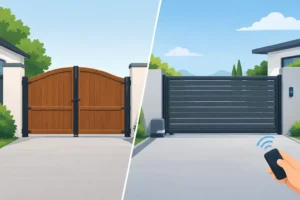
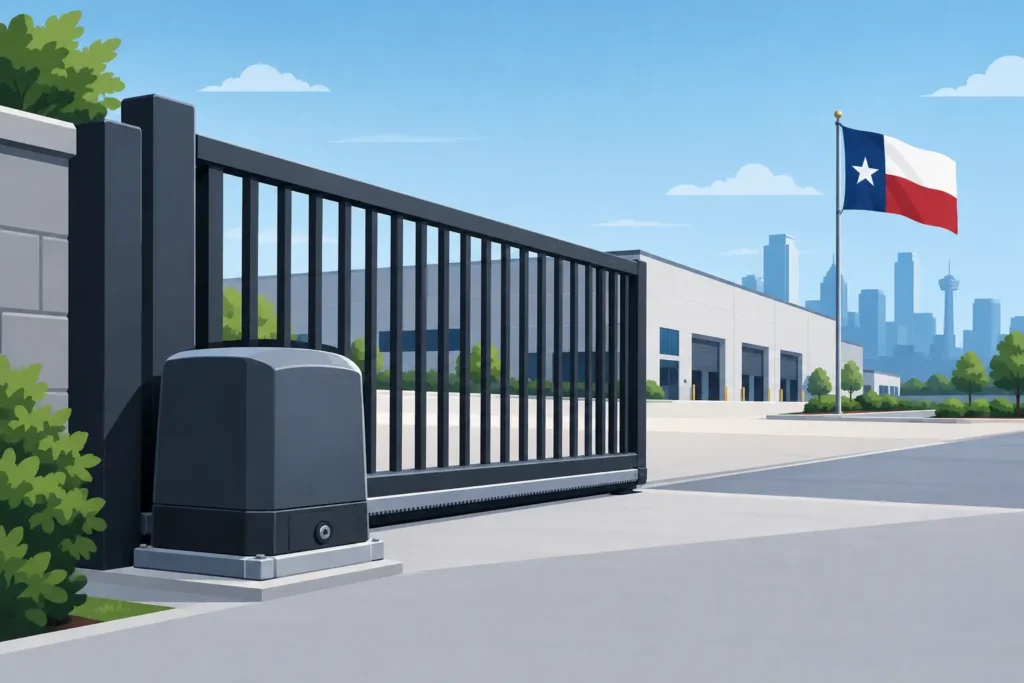
- Sliding gate operators are common for commercial driveways because they move the gate along the fence line rather than swinging into the drive. They are a strong option for wide openings and properties where vehicles need clear approach space. Cantilever slide gates are especially useful where ground tracks would collect debris or interfere with uneven pavement.
- Swing gate operators work well for entrances with adequate clear space inside the property. They can create an attractive, traditional appearance for office complexes, private communities, and ranch entrances. They require careful planning because wind, slope, and large gate leaves can place substantial force on the operator and hinges.
- Barrier arm operators are designed for fast-moving vehicle traffic rather than perimeter security by themselves. They are often used at parking lots, controlled employee entrances, and attended checkpoints. A barrier arm may be paired with fencing, a sliding gate, or another physical barrier when security is also a concern.
- Vertical lift and vertical pivot operators are specialized choices for properties with limited side room. They can be valuable at industrial sites or tight urban entrances, though they typically require a more complex structure and professional planning.
For many Houston-area commercial sites, a sliding gate offers the best balance of security and traffic capacity. Still, no single style fits every entrance. The correct choice depends on the property layout and the gate structure supporting it.
Match Operator Capacity to the Gate and Traffic Volume
Commercial operators are rated for gate weight, length, and duty cycle. These ratings should be treated as operating guidelines, not targets to push to the limit. Selecting an operator that barely meets the gate’s weight rating can lead to premature wear, poor performance, and costly service calls.
Duty cycle is equally significant. A gate serving a small private lot may open a few dozen times each day. A busy commercial entrance may cycle hundreds of times during peak periods. The operator must be designed for that workload, particularly if it will open and close repeatedly during shift changes, deliveries, or school pickup traffic.
The gate itself must also be built correctly. A heavy ornamental iron gate with sagging hinges or a poorly supported sliding gate will cause problems regardless of the operator installed. Quality rollers, hinges, posts, guide assemblies, and foundations protect the investment in the automation equipment.
Wind is another factor that deserves attention along the Gulf Coast. Solid-panel gates can act like sails in strong weather. A custom gate design may need open pickets, reinforced framing, or a different operating method to reduce stress on the structure and operator.
Plan Access Control Before Installation
An automatic operator controls gate movement, but the access-control equipment determines who can enter. The best setup depends on how employees, visitors, tenants, vendors, and emergency personnel use the property.
A keypad can be practical for a small team or scheduled vendors, although codes should be changed regularly. Card readers, key fobs, and mobile credentials provide more control for offices, storage facilities, and managed properties because credentials can be removed when access is no longer needed. Telephone entry systems and video intercoms allow visitors to request entry without someone walking to the gate.
For higher-traffic sites, vehicle detection devices are often part of the plan. Exit loops, photo eyes, and other detection equipment help the gate respond appropriately when a vehicle approaches or passes through. These components should be selected as part of the overall design, not added as an afterthought.
Reliable power is essential. Depending on the site, an operator may need a dedicated electrical circuit, battery backup, solar support, or a combination of these options. Battery backup can be especially valuable during power interruptions, but it must be sized for the gate, expected use, and desired operating time. Solar can be effective in the right location, though shade, gate activity, and battery capacity must be evaluated honestly.
Make Safety Equipment a Core Requirement
Commercial automated gates need more than a motor and remote control. They require properly installed safety devices that reduce the risk of a gate contacting a person, vehicle, or object. This includes photo eyes, monitored edge sensors where appropriate, vehicle detection, emergency release equipment, and clearly placed warning signs.
Current safety requirements and manufacturer instructions should guide the installation. Operators commonly need to meet UL 325 safety standards, while gate construction and placement should address entrapment hazards. A professional installer evaluates pinch points, the travel path, nearby fencing, pedestrian access, and the potential for someone to reach through or around the gate.
Pedestrians should not be expected to use a vehicle gate as their entrance. A separate walk gate or controlled pedestrian access point is usually the safer solution. This is particularly relevant for commercial properties with employees arriving on foot, customers, or regular contractor traffic.
Installation Details That Affect Reliability
A commercial gate operator performs best when the site preparation is handled with the same care as the equipment selection. Stable posts and foundations prevent movement that can throw a gate out of alignment. Proper drainage keeps water from collecting around tracks, rollers, and electrical components. Conduit placement protects wiring and makes future service more manageable.
The gate should travel freely by hand before automation is connected. If it binds, drags, or requires excessive force, the mechanical issue should be corrected first. Automation cannot compensate for poor alignment or inadequate structural support.
Placement of controls matters as well. Keypads and card readers should be positioned so drivers can reach them without blocking traffic or creating a dangerous stopping point. Exit devices need to detect vehicles consistently while avoiding false activations from nearby lanes. For properties with large trucks, mounting heights and approach distances should reflect the vehicles actually using the entrance.
Keep a Maintenance Plan After the Gate Is Installed
Commercial gate systems need periodic service. Dust, moisture, insects, vegetation, vehicle impact, and normal wear can affect moving parts and electronic components. A simple maintenance schedule helps identify small problems before the gate becomes unreliable.
Property managers should have the system checked for gate alignment, roller or hinge wear, chain tension where applicable, hardware condition, safety-device operation, battery health, electrical connections, and access-control performance. The gate area should also be kept clear of landscaping, trash, gravel buildup, and anything that could obstruct travel.
If the gate begins making new noises, moving unevenly, reversing without a clear reason, or failing to close consistently, schedule service rather than forcing the system to keep running. Repeated operation when a mechanical problem is present can damage the operator and create a larger repair.
A commercial gate is part of your property’s first line of security and often one of the first features visitors see. Choosing the right operator, building the gate to support it, and maintaining the system with care gives your business or managed property controlled access that performs when it is needed most.