A ranch fence is not just a boundary line. It directs livestock, protects equipment, controls access, and helps your operation run safely every day. Knowing how to plan ranch fencing before posts go in the ground helps prevent expensive changes later, especially when your property has uneven terrain, wet areas, multiple pastures, or different types of animals.
The best plan starts with function, then matches the materials, layout, and gate locations to the way you actually use the land. A fence that looks good but creates awkward livestock movement or leaves a gate inaccessible after rain will not serve the property well.
Start With the Job Each Fence Must Do
Before selecting wire, rails, or posts, identify what each section of fence needs to accomplish. A perimeter fence may need to deter trespassing and keep livestock contained. Interior cross-fencing may be intended to divide grazing areas, manage breeding groups, or create a safer path to a barn or loading area.
The animal matters. Cattle, horses, goats, sheep, and poultry all create different fencing demands. Horses often need highly visible fencing with smooth, safe surfaces that reduce injury risk. Goats are skilled at testing weak points and may require tighter mesh, smaller openings, or electric reinforcement. Cattle fencing must stand up to pressure at corners, water points, and feeding areas.
Also consider what you are keeping out. In parts of Texas, wildlife, stray dogs, and unauthorized vehicles can be as much of a concern as livestock containment. A ranch fence plan should account for the full security picture rather than treating every fence run the same.
Map the Property Before You Build
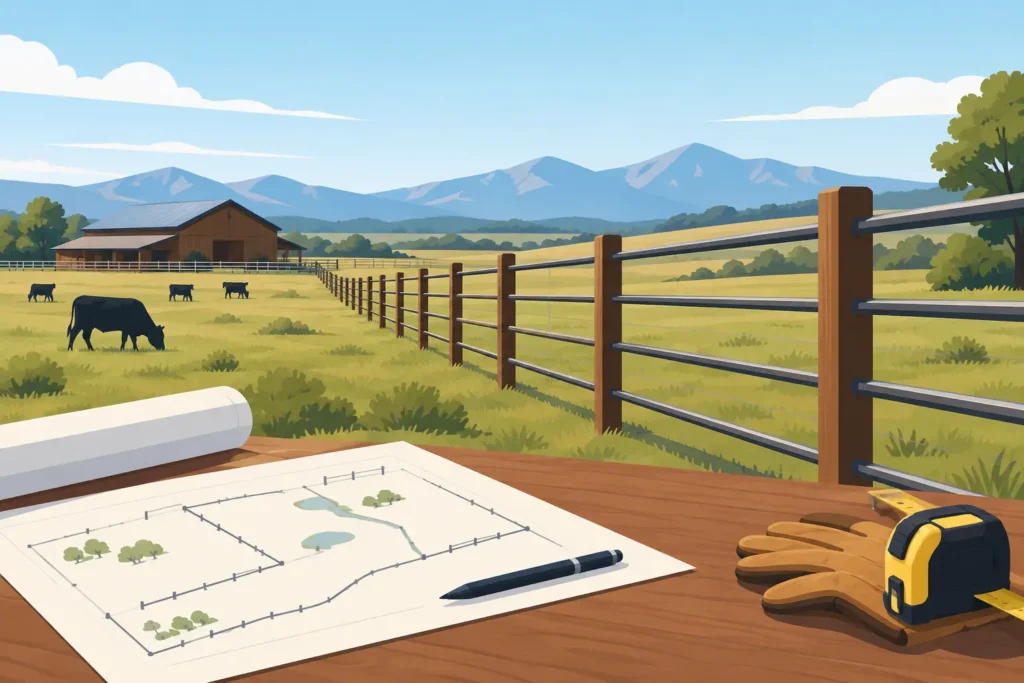
Walk the property and mark the features that affect your layout. Existing fence lines are useful reference points, but they should not automatically determine the new design. An older fence may sit in the wrong place, follow a poor drainage route, or fail to support the way the ranch operates today.
Your map should show property boundaries, buildings, barns, ponds, creeks, trees, utility lines, driveways, roads, and changes in elevation. Note low spots where water collects. In the Houston area, heavy rain and soft ground can affect post stability, gate operation, and long-term fence alignment. Planning for drainage early is far easier than repairing leaning posts after repeated flooding.
If a boundary is uncertain, confirm it through a current survey before construction begins. Installing a fence on a neighbor’s property can create a costly dispute, even when the placement was unintentional.
Plan livestock flow, not just fence lines
A useful ranch layout allows animals to move from pasture to water, shade, feeding areas, pens, and working facilities without constant rerouting. Think through routine tasks such as checking stock, moving animals, bringing in feed, and loading trailers.
Place cross-fences so they support rotational grazing or herd separation without creating narrow traps or dead-end corners. Where practical, design lanes that let livestock move between pastures and handling areas. A well-positioned lane can save substantial time and reduce stress on both animals and handlers.
Corners deserve special attention. Sharp corners can crowd animals and encourage them to push against fencing. Depending on the layout, rounded corners, diagonal braces, or small catch areas may improve movement and reduce pressure on the fence.
Choose Materials for Performance and Maintenance
There is no single best ranch fence material. The right choice depends on livestock, terrain, visibility, security expectations, budget, and how much maintenance you are prepared to perform.
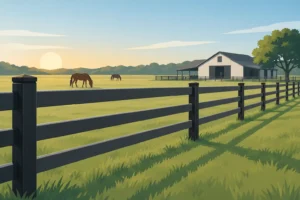
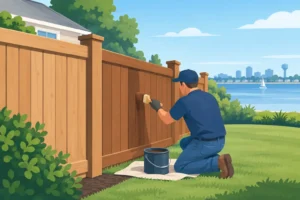
Wood fencing provides a traditional ranch appearance and excellent visibility, particularly for horse properties and entrances. It can be custom-built to complement gates, barns, and residential areas, but it requires quality posts, proper installation, and periodic maintenance in humid conditions.
Woven wire is a practical option for many livestock applications because it provides continuous containment along the fence line. The mesh opening, wire gauge, and fence height should match the animals being contained. Barbed wire remains common for cattle operations, although it is generally not the preferred choice where horses are present because of injury concerns.
Pipe and metal fencing offer strength, durability, and a polished appearance around entry points, corrals, and high-traffic areas. They cost more upfront than basic wire fencing, but their long service life can make sense in locations that receive frequent use. Electric fencing can be highly effective as a primary or secondary barrier when it is properly energized, grounded, and maintained. It is often especially useful for keeping animals from leaning on or testing a physical fence.
For many properties, a combination is the best answer: durable perimeter fencing, practical cross-fencing, and more substantial materials around gates, barns, road frontage, or working pens.
Build Strong Corners, Braces, and Posts
Fence strength is determined by more than the material stretched between posts. End assemblies, corners, braces, and gate posts carry the load. When these structural points are undersized or poorly installed, even quality wire and rails will sag over time.
Post depth should reflect soil conditions, fence height, expected pressure, and local weather exposure. Sandy or wet soil may require deeper setting, larger posts, or reinforced assemblies. Gates need especially stable posts because their repeated movement places continuous leverage on the structure.
Do not space posts solely by what looks even from the road. Terrain changes, dips, and rises may require adjustment to keep the bottom of the fence close enough to the ground while maintaining a clean, professional line. On long runs, properly placed braces help preserve tension and reduce future repairs.
Put Gates Where Work Happens
Gates are one of the most overlooked parts of ranch fencing plans. They should be wide enough for the equipment that must pass through them, including tractors, trailers, mowers, and emergency vehicles. A gate that works for an ATV may become a daily problem when a hay delivery arrives.
Consider the direction of travel, ground slope, and drainage at every opening. A gate that swings downhill into a muddy low spot is frustrating and can become unusable. For busy entrances, sliding gates or custom metal gates may be a better fit than a swinging gate, depending on available clearance and security needs.
Plan separate access where it improves safety. For example, a pedestrian gate near a barn can reduce unnecessary vehicle gate use, while a dedicated equipment entrance keeps large machinery away from livestock traffic. Gate latches should be easy for authorized users to operate but secure enough to prevent animals from opening or forcing them.
Budget for the Entire System
A ranch fencing budget should include more than the cost per linear foot. Account for clearing brush, grading trouble spots, removing old fencing, setting posts, installing braces, building gates, and addressing drainage. Difficult terrain and long material runs can affect labor and delivery costs as well.
It may be tempting to reduce costs by using lighter posts or fewer braces. That choice often shifts the expense into earlier repairs, sagging wire, and replacement work. A better approach is to invest in the structural components that carry the most stress, then select practical materials for lower-pressure sections.
Phasing can also be sensible for large properties. Start with the perimeter, primary gates, and areas needed for immediate livestock control. Then complete cross-fencing and secondary improvements as the operation and budget allow. The key is creating a master plan first so each phase connects correctly to the next.
Work With a Contractor Who Understands the Site
A professional site evaluation can identify issues that are difficult to see from a simple sketch, including drainage paths, unstable soil, access constraints, and the structural requirements of long fence runs. Custom planning also makes it easier to coordinate ranch fencing with entry gates, residential fencing, and commercial-style security features where the property has multiple uses.
Delta Fence and Construction helps property owners create fencing systems that are built around real conditions, not a one-size-fits-all layout. Quality workmanship, properly selected materials, and thoughtful gate placement can make a meaningful difference in daily operations and long-term value.
A well-planned ranch fence should make the property easier to manage from the first day it is used. Take the time to walk the land, picture the daily work, and build each section for the job it will perform for years to come.