A gate should make entering your property easier without weakening the boundary it is meant to protect. The manual gate versus automatic decision often comes down to more than convenience. Traffic volume, gate size, security expectations, available power, and the way the property is used all affect which option will perform best over time.
For a quiet residential driveway, a well-built manual gate may offer the right blend of security, curb appeal, and value. For a busy commercial entrance, long private drive, or working ranch, an automatic gate can reduce daily friction while giving owners better control over access. The right choice is the one that fits the property, not simply the one with the most features.
When a Manual Gate Is the Better Fit
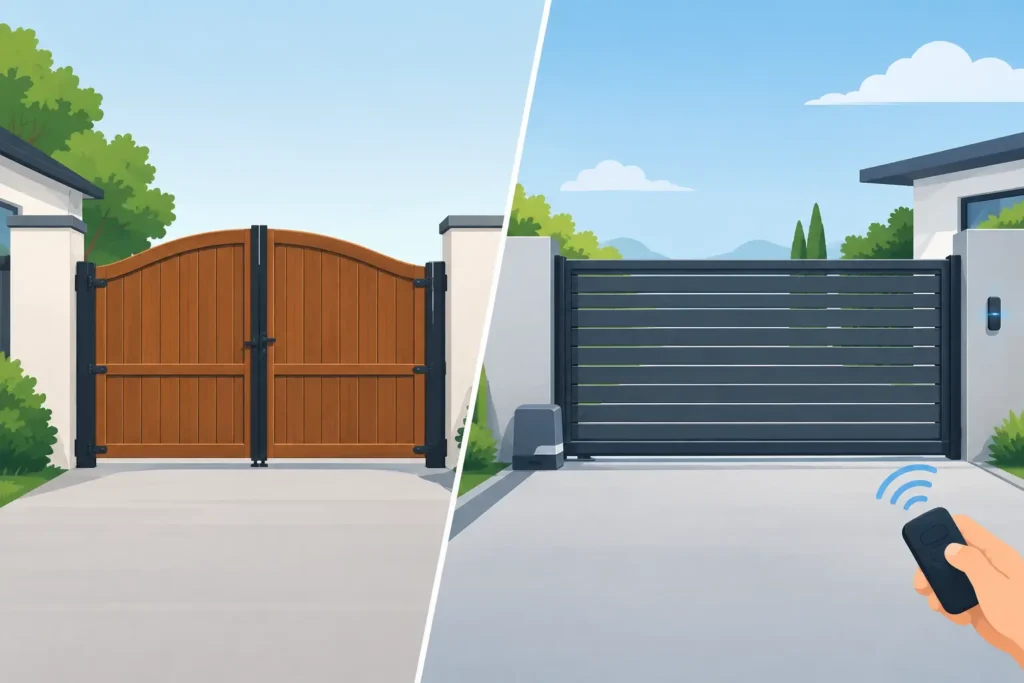
A manual gate is opened and closed by hand, typically with a latch, lock, drop rod, or chain. It has fewer moving parts than a powered system, which makes it a practical option for properties where vehicles enter only occasionally or where a simple, dependable barrier is the main goal.
For many homeowners, manual gates work especially well at side yards, pool enclosures, garden entries, and shorter driveways. A custom wood, ornamental iron, aluminum, or chain link gate can complement the fence design while creating a clear point of entry. With quality hinges, properly set posts, and reliable hardware, a manual gate can operate smoothly for years.
Manual operation also gives owners direct control without depending on electricity, batteries, remotes, or a cellular signal. That can be valuable for rural land, vacant lots, and areas where power at the gate would be expensive to install. If a storm causes an outage, a manual gate still works as intended.
The trade-off is obvious on a rainy day, during heavy traffic, or when a driver must leave a vehicle to open and secure the gate. A manual gate also relies on people remembering to close and lock it. For a property with frequent visitors, deliveries, employees, or livestock movement, those small delays can become a daily frustration.
When an Automatic Gate Earns Its Cost
An automatic gate uses an operator to open and close the gate through a remote, keypad, phone-based entry system, access card, vehicle sensor, or other control method. It is built for convenience, but its strongest benefit is controlled access. The owner can decide who enters, when they enter, and how the gate responds after a vehicle passes through.
Automatic gates are often a strong fit for long residential driveways, gated communities, commercial properties, storage yards, ranch entrances, and properties with regular service traffic. A business can limit access outside operating hours. A homeowner can let family members in without walking to the gate. A ranch owner can manage vehicles entering a private road while keeping animals safely contained.
The installation must be designed as a complete system, not just a gate with a motor attached. Gate weight, width, wind exposure, slope, post strength, track condition for slide gates, and daily cycle count all influence which operator is appropriate. An undersized operator may struggle, wear prematurely, or create unreliable performance.
Safety equipment is equally important. Automatic gates should include properly placed photo eyes, obstruction detection, and an accessible manual release for emergencies or power failures. Depending on the design, vehicle loops or edge sensors may also be needed. Professional installation helps ensure the gate moves predictably and does not create an unnecessary hazard for people, pets, vehicles, or equipment.
Automatic systems require ongoing attention. Operators, hinges, rollers, tracks, batteries, and access controls need periodic inspection. In the Houston area, humidity, heavy rain, heat, and storm debris can affect performance if drainage, wiring protection, and hardware quality are overlooked. A well-designed system is easier to maintain, but no powered gate is maintenance-free.
Manual Gate Versus Automatic: Cost and Value
The upfront price difference between a manual gate and an automatic gate can be significant. A manual gate generally requires the gate structure, posts, hinges, latch hardware, and installation. An automatic system adds an operator, controls, safety devices, electrical work or solar equipment, and potentially trenching for power or access wiring.
That does not mean a manual gate is always the lower-cost choice over the life of the property. If people repeatedly have to stop, exit their vehicles, open a heavy gate, drive through, and close it again, the inconvenience has a real cost. On a commercial site, it can slow deliveries, disrupt operations, and lead to gates being left open. On a residence, it may simply mean the gate is used less consistently than planned.
Automatic gates can also add value through convenience, privacy, and perceived security. However, they should not be treated as a substitute for strong fencing, proper lighting, or thoughtful property management. A gate operator controls access at one point. The gate and fence still need to be structurally sound enough to provide the level of protection the property requires.
A practical budget should include the expected maintenance of the system. Manual gates may eventually need hinge adjustments, hardware replacement, repainting, or wood repairs. Automatic gates may need those same structural repairs plus operator servicing, battery replacement, sensor alignment, and occasional control updates. The best value comes from selecting durable materials and installing the right system from the start.
Choosing the Right Gate Style and Operation
Gate operation should match the available space. Swing gates create a classic appearance and can work well for driveways with adequate clearance. They need room to open inward or outward and may require special planning on sloped driveways. A dual-swing gate can reduce the space required for each leaf, although it adds components that need to stay aligned.
Slide gates are often better for wide openings, limited driveway depth, or locations where a swing gate would interfere with traffic. They can be cantilevered above the ground or supported by a track, depending on the site and gate design. For commercial entrances and large ranch gates, slide systems are frequently preferred because they can manage larger openings efficiently when properly engineered.
Material matters, too. Ornamental iron and steel can create a strong, formal entrance but need appropriate coatings and maintenance. Aluminum offers a lighter, corrosion-resistant option for many residential settings. Wood brings warmth and privacy but adds weight and requires care in the Texas climate. Chain link gates are practical for utility areas, equipment yards, and farm applications. A custom gate should be designed around both appearance and the load it will place on hinges or an automatic operator.
Questions to Ask Before You Decide
Start with how often the gate will be used. A gate opened a few times each week has different demands than one handling employee traffic, deliveries, visitors, and service vehicles every day. Consider who needs access, whether they need it at different hours, and whether the gate must accommodate trailers, trucks, or emergency vehicles.
Next, look at the site. Is power available at the entrance? Is there enough room for the gate to swing or slide? Does the driveway slope? Does the area hold water after heavy rain? These details influence the cost and reliability of both manual and automatic gates.
Finally, think beyond the gate itself. Posts, footings, fence transitions, latches, access controls, and drainage should work together. A beautiful gate that drags, sags, or fails to secure properly will not deliver the result the property deserves. Delta Fence and Construction can help property owners evaluate these details and build a gate system suited to their layout, material preferences, and daily use.
The best gate is one you will use correctly every day. Choose manual operation when simplicity and lower maintenance fit the property. Choose automation when consistent access control and convenience will make the entrance safer, more efficient, and more useful for years ahead.