A chain link fence may do its job well while still leaving a property feeling exposed. If you are deciding how to hide chain link fencing, the right approach depends on whether privacy, curb appeal, wind control, security, or a better view is your main goal. The best solution should improve the look of the fence without weakening the structure that already protects your property.
For homeowners, businesses, and property managers, chain link is often a practical perimeter choice. It is durable, cost-effective, and allows visibility where visibility matters. Hiding it does not always mean turning it into a solid wall. A well-planned cover can soften the industrial appearance, create useful privacy, and preserve access for maintenance.
Start With the Condition of the Existing Fence
Before adding anything to chain link, inspect the fence itself. Check for loose posts, sagging fabric, bent top rails, rusted fittings, damaged gates, and areas where the bottom has lifted off the ground. A privacy screen, slats, or climbing plants can add weight and wind pressure. Those additions will expose weaknesses that might not have been noticeable when the fence was open.
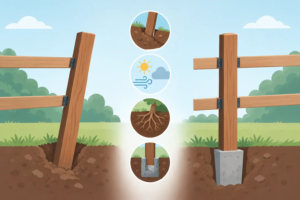
Pay particular attention to the terminal posts at corners, ends, and gates. These posts carry much of the fence tension. If they are leaning or set in deteriorating concrete, repair them first. A fence that needs frequent tightening or has widespread corrosion may be a better candidate for replacement than concealment.
Property lines and local requirements matter, too. A fence cover that extends above the existing height can create a compliance issue, especially in neighborhoods with deed restrictions or on commercial sites with visibility requirements near driveways. If the fence is shared with a neighbor, discuss the plan before attaching materials to it.
Privacy Slats: A Durable, Low-Maintenance Choice
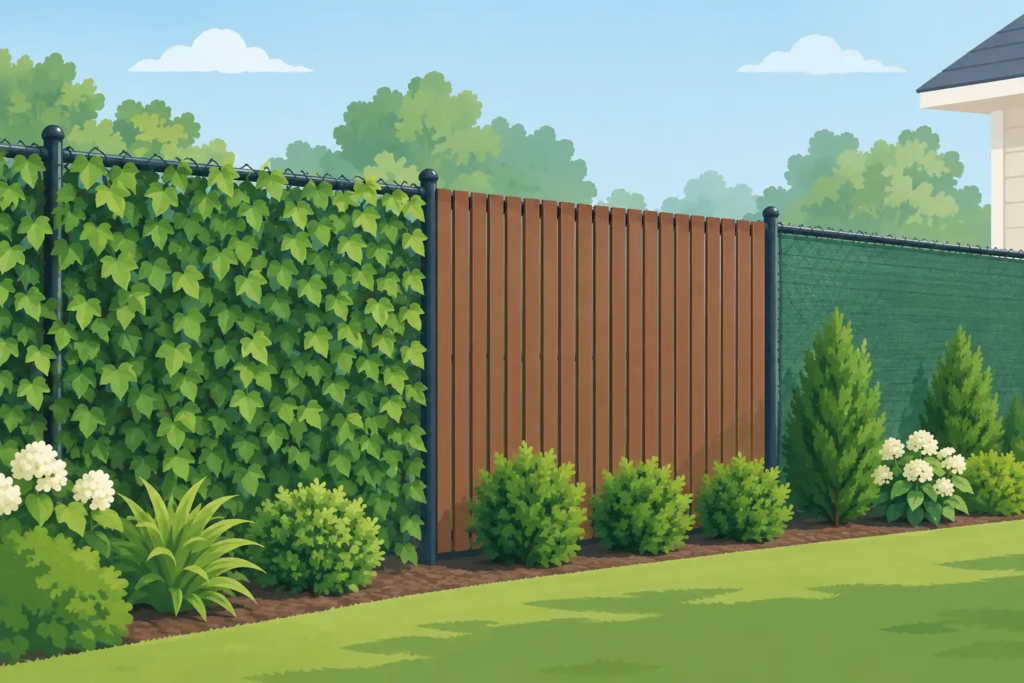
Privacy slats are one of the most practical ways to change the appearance of a chain link fence. These narrow inserts weave vertically or diagonally through the mesh, reducing visibility while allowing some air to pass through. They are available in several colors, so a dark green, black, brown, or neutral tone can make the fence blend more naturally with landscaping or building finishes.
Slats work especially well when the chain link is structurally sound and the goal is consistent coverage across a long boundary. They generally look cleaner and last longer than temporary fabric options. They also preserve the fence’s basic security function because the underlying chain link remains intact.
The trade-off is that slats do not provide complete visual blockage. Depending on the mesh size, slat style, and viewing angle, silhouettes and light can still pass through. They also add wind resistance. On an exposed property in the Houston area, proper post depth, bracing, and tension are essential before installing a dense slat system.
Use Privacy Screens for Fast Coverage
Privacy screens are usually woven mesh panels attached to the chain link with ties or fasteners. They are a useful choice for construction areas, pool equipment, service yards, dog runs, storage areas, and backyards where an immediate visual barrier is needed. Quality screens are made for outdoor exposure and often include reinforced edges and grommets for secure attachment.
A screen can offer substantial privacy, but it should never be treated like a sail. When wind hits a solid-looking screen, the force transfers directly to the fence posts and framework. Choose a breathable material, attach it at regular intervals, and avoid stretching it so tightly that it cannot move slightly in changing weather.
For a more finished result, select a screen sized for the fence height rather than folding or bunching excess material. Keep it clear of gate hinges, latches, and access controls. If a screen begins to fray, sag, or pull away from the grommets, address it quickly before the damage spreads across the panel.
When Screens Make the Most Sense
Screens are often the right fit when privacy needs may change over time. A business may need to shield a work area during a project, while a homeowner may want more backyard separation without committing to a full replacement. They are also useful where airflow is important and a solid fence would create too much wind load.
Add Greenery for a Softer Property Boundary
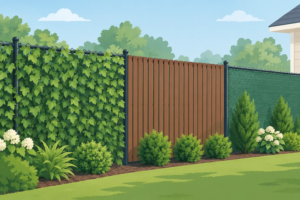
Landscaping is one of the most attractive ways to hide chain link, particularly around residential yards, patios, pools, and garden areas. The key is choosing plants that match the available space, sun exposure, irrigation, and maintenance level. A row of shrubs creates a living screen, while vines can use the chain link as support.
Evergreen shrubs offer more consistent privacy than deciduous plants, but they need enough width to mature without crowding the fence. Planting too close makes trimming difficult and can trap moisture against the metal. Leave a maintenance gap so the fence remains accessible for repairs and the plants have room to develop healthy roots.
Climbing plants can cover a fence quickly, but they require more care than many property owners expect. Aggressive or woody vines may become heavy, work into fittings, and make future fence service difficult. Choose a manageable variety, install it with a plan for pruning, and avoid allowing it to overtake gates or latch areas.
A layered planting design often looks better than a single row. Low ornamental grasses or flowering plants in front of taller shrubs can visually soften the base of the fence. This approach does not create instant coverage, but it creates a more natural boundary that adds value to the landscape over time.
Build a Separate Decorative Barrier
If you want the look of wood, metal, or composite privacy fencing without removing the chain link right away, a separate decorative barrier may be the answer. This can include freestanding wood panels, horizontal screen sections, lattice with framing, or a carefully designed planter wall placed inside the property line.
The important detail is separation. Decorative panels should be supported by their own posts and footings when they are substantial in size. Simply fastening heavy wood panels directly onto chain link can twist the fabric, overload the rails, and make the gate difficult to operate. A custom-built screen can also be designed around utilities, grade changes, and existing landscaping.
This option gives homeowners more design flexibility. Wood can complement a deck or exterior trim, while metal panels can provide a modern appearance. For commercial properties, a durable screen wall can hide dumpsters, HVAC equipment, or service areas while preserving a secure chain link perimeter behind it.
Consider Partial Coverage Instead of Hiding Everything
Not every chain link fence needs full privacy. Partial coverage can solve the real problem with less expense and less strain on the fence. For example, screening only the patio side of a backyard, the neighbor-facing section near a pool, or the storage area behind a business may provide the desired result.
This approach is especially valuable when the fence borders a drainage area, a large property, or a location where visibility supports security. Chain link allows sightlines across a commercial perimeter and helps ranch or farm owners monitor animals and equipment. Cover the areas that need privacy while keeping other sections open and easy to inspect.
Know When Replacement Is the Better Investment
There is a point where hiding chain link becomes a temporary answer to a larger fencing problem. If the fence is heavily rusted, sagging in several areas, undersized for the property, or no longer matches the level of privacy and security you need, replacement may offer better long-term value.
A wood privacy fence, ornamental iron fence, aluminum fence, or custom metal fence can be designed for the property rather than adapted around its limitations. Replacement is also worth considering when you need a new gate layout, controlled access, a taller perimeter, or a finished appearance that a cover cannot fully deliver.
For properties in League City, Friendswood, and Clear Lake, the right choice should account for soil conditions, wind exposure, drainage, and the purpose of the boundary. A professional assessment can clarify whether the existing posts and framework can support a privacy addition or whether a custom fence will provide a more dependable result.
The strongest solution is the one that improves the view without compromising the fence’s job. Whether that means slats, screening, landscaping, or a new custom-built boundary, start with a secure structure and choose materials that will still look and perform well after years of Texas sun, rain, and wind.