A gate is often the one part of a fence people touch, operate, and notice every day. If it sags, drags, sticks, or looks out of place, the entire perimeter feels less finished. A well-planned gate does more than close an opening. It controls access, supports security and privacy, and gives the property a deliberate, well-built appearance. This custom gate design guide explains how to make decisions that hold up under daily use and Gulf Coast weather.
Start With the Job Your Gate Must Do
Good gate design begins with function, not a catalog photo. A side-yard pedestrian gate has different requirements than a driveway entrance, a pool enclosure, a ranch access point, or a commercial service gate. The opening needs to accommodate the people, vehicles, equipment, or animals that will use it most often.
For a residential walk gate, the priorities may be privacy, convenient latch access, and a style that matches the existing fence. A driveway gate must account for vehicle width, turning room, slope, and whether the gate will be operated by hand or by an opener. Farm and ranch gates need dependable clearance for trucks, trailers, tractors, and livestock movement. Commercial properties may require a wider opening, controlled entry, and a design that discourages unauthorized access.
Think beyond normal use as well. Consider deliveries, landscaping crews, emergency access, trash collection, and future projects. A gate that is adequate for one SUV may become frustrating when a trailer or work vehicle needs to pass through.
Choose a Gate Layout That Fits the Site
The basic layout affects convenience, cost, and long-term performance. A single swing gate is a practical choice for smaller pedestrian openings and many standard driveways. It has fewer moving parts than other configurations, but it needs enough clear space to swing inward or outward without striking a vehicle, landscaping, or a sloped surface.
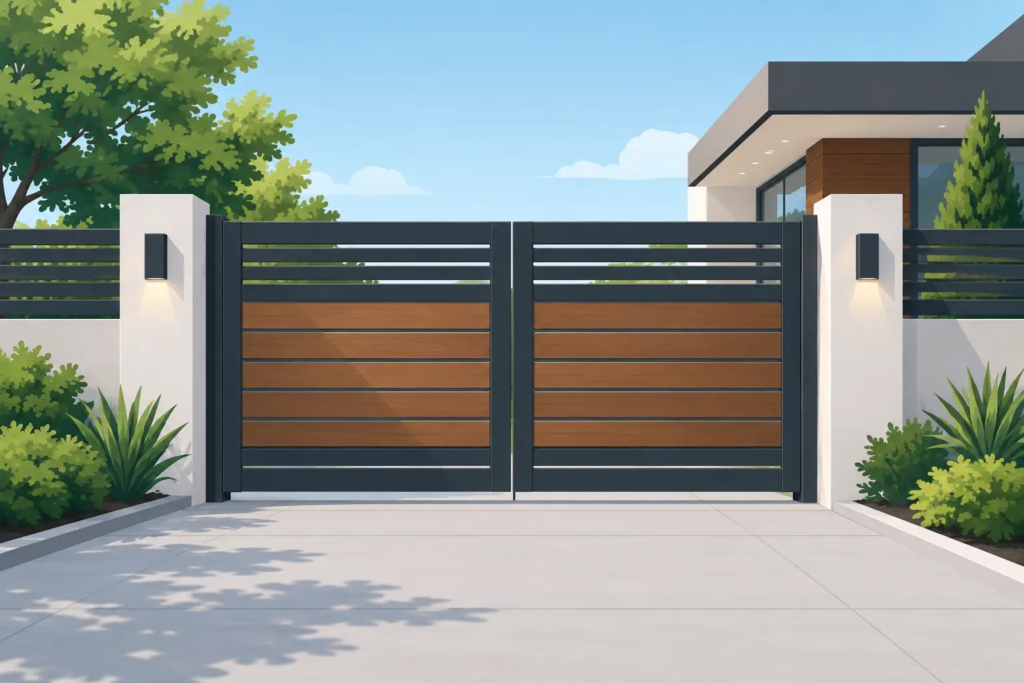
Double swing gates split a larger opening into two leaves. This can reduce the weight carried by each side and create a traditional, balanced entrance. They do require a reliable center latch or drop rod, and both leaves must remain aligned as the ground and structure settle.
Sliding gates are often the better answer when the driveway slopes, space behind the gate is limited, or a wide opening is needed. A slide gate runs parallel to the fence line rather than swinging into the drive. The trade-off is that it needs room along the fence for the gate to travel, plus correctly designed track, rollers, cantilever hardware, or a supporting frame.
For properties in League City, Friendswood, and Clear Lake, drainage should be part of this decision. Water can collect near low points and interfere with swing clearance, tracks, or hardware. The gate design should work with the grade of the property rather than fight it.
Match the Material to Performance Needs
The right material depends on the look you want, the fence it connects to, the desired level of privacy, and how much maintenance you are prepared to handle.
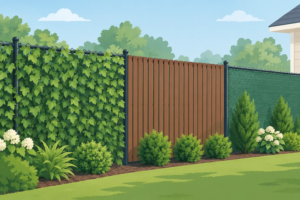
Wood gates bring warmth and can blend naturally with wood privacy fencing. They can be built with vertical pickets, horizontal boards, decorative top rails, or framed details that give the entry more character. Because wood is affected by moisture, sun, and repeated movement, a wide wood gate needs a strong frame, properly set posts, and construction that resists sagging. Staining or sealing on a regular schedule helps preserve its appearance.
Wrought iron or ornamental metal gates create a more open, formal look while providing clear boundary definition. They work well for front entries, pool areas, estate-style driveways, and commercial properties where visibility matters. Metal can be shaped into simple clean lines or decorative patterns, but the design should not sacrifice safe spacing, secure latching, or structural strength.
Aluminum offers a similar open appearance with lighter weight and strong resistance to corrosion. It is often a practical option near the coast, where humidity and salt in the air can be hard on certain materials. Steel gates are exceptionally strong and well suited to demanding driveway or commercial applications, though protective coatings and quality fabrication are essential.
Chain link and farm-style gates are efficient choices where function takes priority. They can secure side yards, equipment areas, service corridors, pasture entrances, and larger utility openings. Adding privacy slats, wood infill, metal panels, or a decorative frame can make a practical gate better match the rest of the property.
Build the Structure Before Focusing on Details
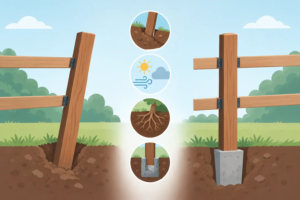
A beautiful gate only performs as well as its posts, frame, hinges, and footing allow. This is where custom craftsmanship matters most. Gates put concentrated weight and repeated force on a small area of fence, so the support system cannot be treated like an ordinary fence panel.
Posts must be sized and installed for the gate’s weight, width, and operating method. A heavy driveway gate may need steel posts or reinforced supports even when the adjacent fence is wood. The frame should keep the gate square, resist twisting, and support the chosen infill without excess flex. Proper diagonal bracing is especially important for larger wood and metal swing gates.
Hardware should match the gate rather than being selected as an afterthought. Heavy-duty hinges, adjustable hardware, reliable latches, drop rods, wheel supports, and weather-resistant fasteners all affect the experience of using the gate. A low-cost latch can become a daily problem if it does not align consistently or cannot stand up to weather and frequent use.
Plan Security, Privacy, and Access Together
A gate can improve security without making a property feel closed off. The best approach depends on who needs access and how often. A keyed latch may be enough for a private side gate. A driveway entrance may benefit from an electric operator, keypad, remote controls, intercom, or vehicle sensor. Commercial and multi-tenant properties may need access credentials, exit loops, and a layout that keeps vehicles from blocking traffic.
Height and visibility deserve careful thought. Solid wood or composite-style infill provides privacy, but it limits sight lines. Open metal designs allow visibility and can make it easier to monitor activity near an entrance, though they offer less screening. Combining materials can provide a useful balance, such as an ornamental frame with privacy panels where screening is needed.
For pools, pets, and children, gate safety is not optional. Self-closing hinges, self-latching hardware, latch placement, and code requirements may apply. A contractor should verify the local rules that affect your property and design the gate around safe daily operation.
Design for Automation From the Beginning
Adding an automatic opener after a gate is installed can be possible, but planning for it early usually produces a cleaner and more dependable result. The gate must be properly balanced, framed for the operator, and supported by posts that can handle the forces of powered operation. Power access, battery backup, safety sensors, control boxes, and conduit should all be considered before concrete, fencing, or landscaping is completed.
Automation is not automatically the right answer. A manually operated gate may be simpler and more economical for a lightly used side entrance. On the other hand, a busy driveway, commercial entry, or long private drive may justify the added convenience and access control of an operator. Choose the system based on traffic patterns and maintenance expectations, not just novelty.
Make the Gate Look Intentional
A custom gate should feel connected to the home, building, or land it serves. Repeating a fence material, post cap, rail profile, color, or ornamental detail creates a finished appearance. The gate can be a focal point, but it should not compete with the architecture or look like a separate project added later.
Scale matters. A narrow gate with oversized decorative features can feel crowded, while a wide driveway entrance with an undersized frame can look weak and perform poorly. Delta Fence and Construction helps property owners weigh these details against the practical demands of the site, so the finished gate is built for more than first impressions.
Before finalizing a design, walk the entry route and picture a normal week of use. Open the gate with groceries, a lawn mower, a truck, a pet on a leash, or a delivery vehicle in mind. The right custom gate is the one that makes those everyday movements easier while protecting the property for years to come.