A damaged rear gate, an open loading area, or an undefined property line can create more than an appearance problem. It can expose equipment, inventory, vehicles, employees, and visitors to unnecessary risk. Commercial security fencing gives a business a clear, durable boundary that helps control access while supporting the way the property operates every day.
For commercial properties, the right fence is rarely a one-size-fits-all decision. A small office complex has different needs than a warehouse yard, apartment community, construction site, utility area, or retail center. The best result starts with understanding what needs protection, who needs access, and how the finished perimeter should look from the street.
What Commercial Security Fencing Should Accomplish
A commercial fence should do more than mark a boundary. It should create a visible deterrent, guide people toward approved entry points, and make it harder for unauthorized visitors to reach sensitive areas. When designed well, it also helps property owners manage traffic without making a site feel closed off or neglected.
The level of security depends on the property. Some businesses need a tall, hard-to-climb perimeter around vehicles and stored materials. Others need an attractive metal or aluminum fence that separates public and private areas without blocking visibility. For a property manager, the priority may be a fence and gate system that is dependable enough for daily tenant, maintenance, and delivery traffic.
A practical commercial fencing plan considers four connected needs: perimeter protection, controlled entry, visibility, and long-term maintenance. Focusing on only one can create problems later. For example, a solid privacy fence may limit visibility around a service yard, while an open ornamental fence may not provide the screening needed for trash enclosures or mechanical equipment.
Choosing the Right Commercial Security Fence Material
Material selection affects security, appearance, maintenance, and budget. The right choice comes down to the level of protection required and the demands placed on the fence over time.
Chain Link for Secure, Functional Perimeters
Chain link remains a practical choice for commercial yards, industrial sites, storage areas, athletic facilities, and temporary projects. It is cost-effective for covering long runs of property line, provides clear sightlines, and can be paired with secure gates, privacy screening, or added security features where needed.
For higher-security applications, chain link can be specified with heavier-gauge fabric, taller posts, and appropriate top treatments. It is a straightforward solution for businesses that need to protect a large area without investing in a decorative perimeter across the entire site. The trade-off is appearance. Standard chain link is functional, but it may not fit the front-facing image of a medical office, retail property, or upscale commercial development.
Ornamental Metal and Wrought Iron-Style Fencing
Commercial metal fencing offers a more polished appearance while maintaining visibility. It works especially well around office buildings, schools, multi-family communities, pool areas, restaurants, and properties where curb appeal matters alongside access control.
Steel or wrought iron-style fencing can be built with height, spacing, and gate configurations that match the site’s security needs. It creates a strong visual boundary without the closed-in look of a solid fence. Aluminum fencing can offer a similar open style with lower maintenance needs, though it may not be the best choice for every high-impact or high-security location.
Wood and Privacy Fencing for Screening
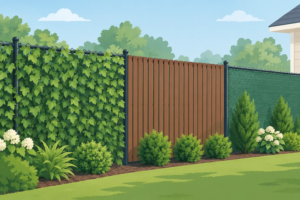
Wood fencing is often used to screen dumpsters, service equipment, employee break areas, patios, or side and rear property lines. A properly built wood privacy fence can improve the appearance of a commercial site and keep less attractive operational areas out of public view.
Privacy is valuable, but it should be used thoughtfully. Tall solid panels can reduce natural sightlines in areas where visibility is part of a security plan. They also need quality posts, framing, and drainage considerations to hold up well through Gulf Coast heat, rain, and wind. The workmanship behind the fence matters as much as the material on the face of it.
Masonry and Custom Perimeter Solutions
For properties seeking a permanent, substantial entrance or perimeter feature, brick and masonry elements can be combined with metal fencing and gates. This approach is common for community entrances, professional campuses, and commercial developments that need a stronger architectural statement.
Custom fencing allows the design to address uneven terrain, unusual property lines, security zones, and brand appearance. It can also combine materials strategically, such as ornamental metal at the street frontage and chain link around a screened rear service area.
Gates Are the Working Part of the Perimeter
A fence is only as effective as its access points. Gates are where daily operation, convenience, and security meet, which is why gate planning deserves early attention.
A commercial gate should accommodate the people and vehicles that use it. Delivery trucks may require a wider opening and generous turning space. Employee entrances may need pedestrian gates separated from vehicle traffic. Service yards may need a dependable slide gate that does not swing into a driveway or parking lane.
The gate type should match available space and traffic patterns. Swing gates can be a good fit for many entrances, but they require clearance to open. Slide gates are often better for busy driveways or tight areas, though they need room along the fence line. Automated access can add convenience for authorized users, but it also introduces components that need professional installation, safety features, and regular service.
It is also wise to plan for the less frequent uses of a gate. Emergency access, large deliveries, maintenance crews, and waste collection can all affect the ideal gate width and placement. A gate that works for passenger vehicles but delays a box truck creates an operational problem that the fence contractor should help identify before installation begins.
Design for Deterrence, Not Just Separation
Effective security fencing makes the property easier to understand at a glance. Visitors should see where they are expected to enter. Employees should have a clear route. Unauthorized access points should be limited, visible, and difficult to use without permission.
Height is one consideration, but it is not the only one. A well-lit, clearly defined fence line with secure latches and properly positioned gates can be more effective than a taller fence with neglected openings. The condition of the fence also matters. Bent sections, loose posts, damaged hardware, and sagging gates send the message that the perimeter is not actively maintained.
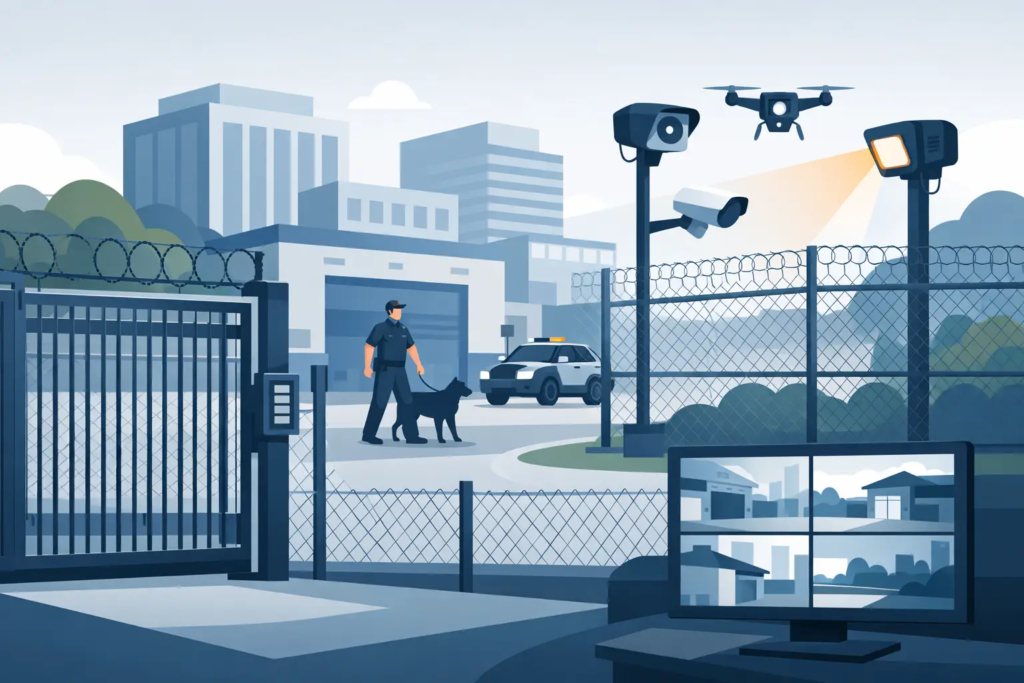
For businesses with valuable equipment outdoors, the fence should work with other site measures rather than replace them. Lighting, cameras, signage, landscaping, and access policies all contribute to a more controlled property. The goal is not simply to create a barrier. It is to make the site easier to supervise and harder to enter unnoticed.
Consider Houston-Area Weather and Site Conditions
Commercial fencing in League City, Friendswood, Clear Lake, and nearby communities must handle intense sun, heavy rain, humidity, shifting soil, and storm conditions. Material quality and installation methods have a direct impact on how a fence performs over time.
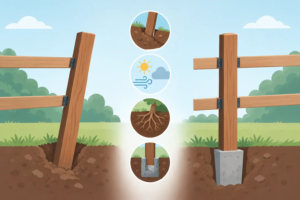
Posts need appropriate depth and secure concrete footings. Gates require strong posts, correctly aligned hinges or rollers, and hardware suited to their weight and use frequency. Drainage should also be considered around low spots, gates, and fence lines, since standing water can affect access and accelerate wear on certain materials.
Local requirements can vary by municipality, property type, and project scope. Before construction, a professional contractor can help identify practical concerns involving property lines, utility locations, gate placement, and any applicable permitting or code requirements. Addressing these details early helps prevent expensive adjustments after the fence is installed.
Plan for Maintenance From the Start
Every commercial fence benefits from routine attention. Chain link may need occasional tension adjustments or hardware replacement. Metal fencing may need touch-up work if its finish is damaged. Wood fences should be checked for moisture damage, loose boards, and post movement. Gates deserve the closest attention because they carry the most mechanical stress.
A maintenance plan does not have to be complicated. Periodic inspections can catch small concerns before they turn into access failures or major repairs. After severe weather, check for leaning posts, shifted gates, damaged panels, and debris around tracks or hinges.
Delta Fence and Construction approaches commercial projects with the understanding that security, appearance, and daily use must work together. A well-built perimeter should protect the investment behind it while presenting the property as organized, cared for, and ready for business.
The right fence does not need to be the tallest or most expensive option. It needs to fit the property, support its daily traffic, and hold its ground when it matters most.